
WINTER JOYS IN OGRE
Snowfall is a great joy for winter sports enthusiasts. In winter, the ski track and hills of Ogre’s Blue Hills attract both young and old, so we offer a brief insight into historical events and images related to skiing in Ogre. Skiing as an outdoor recreational activity became popular in Latvia in the 20th century. […]
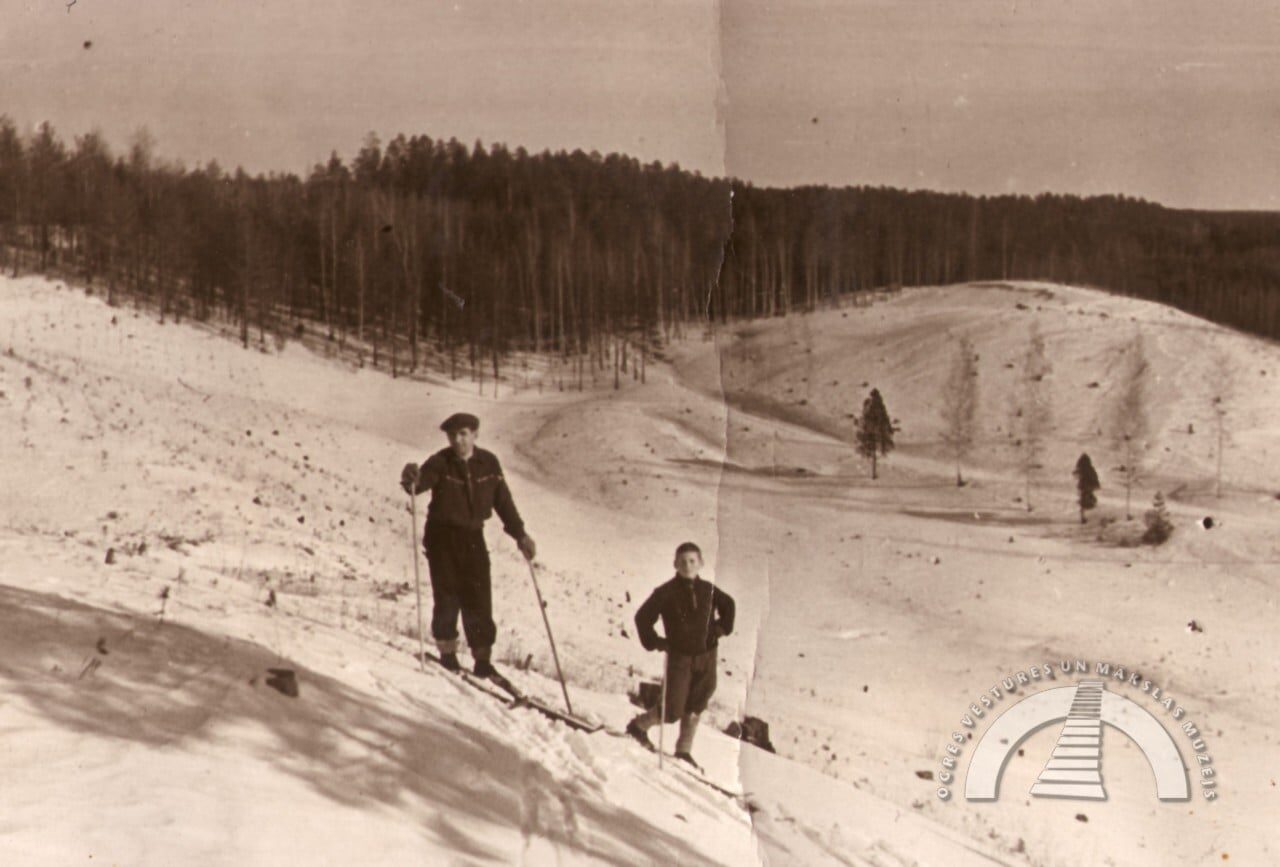
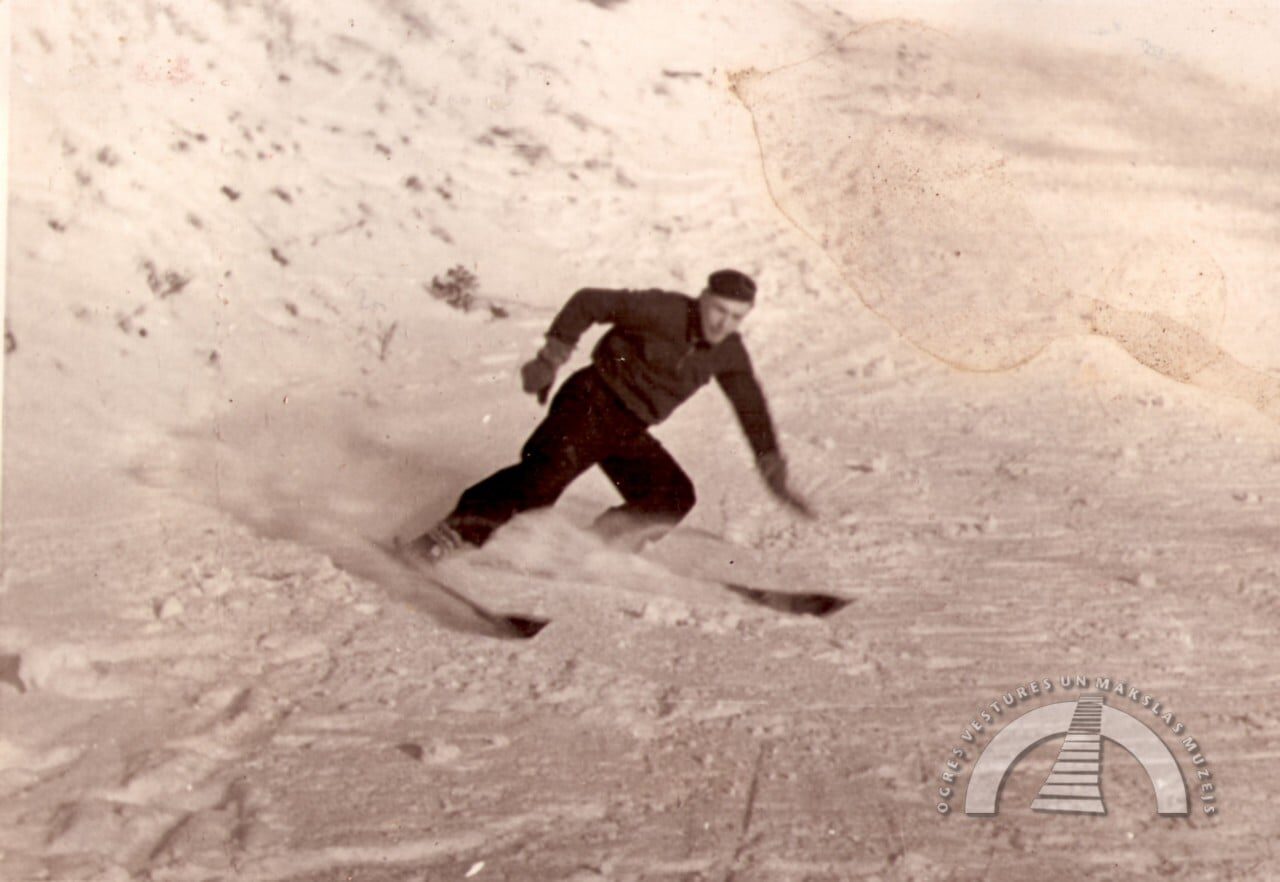
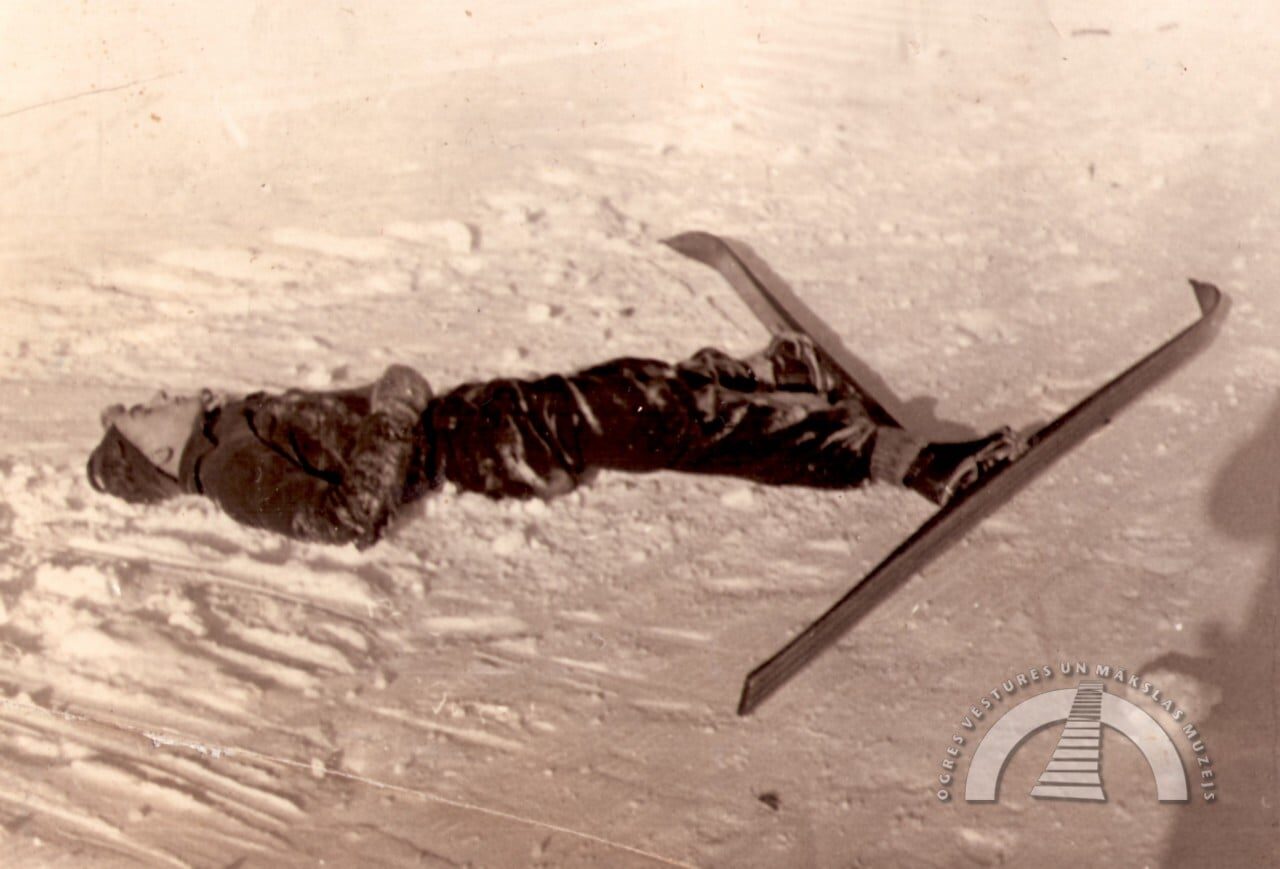
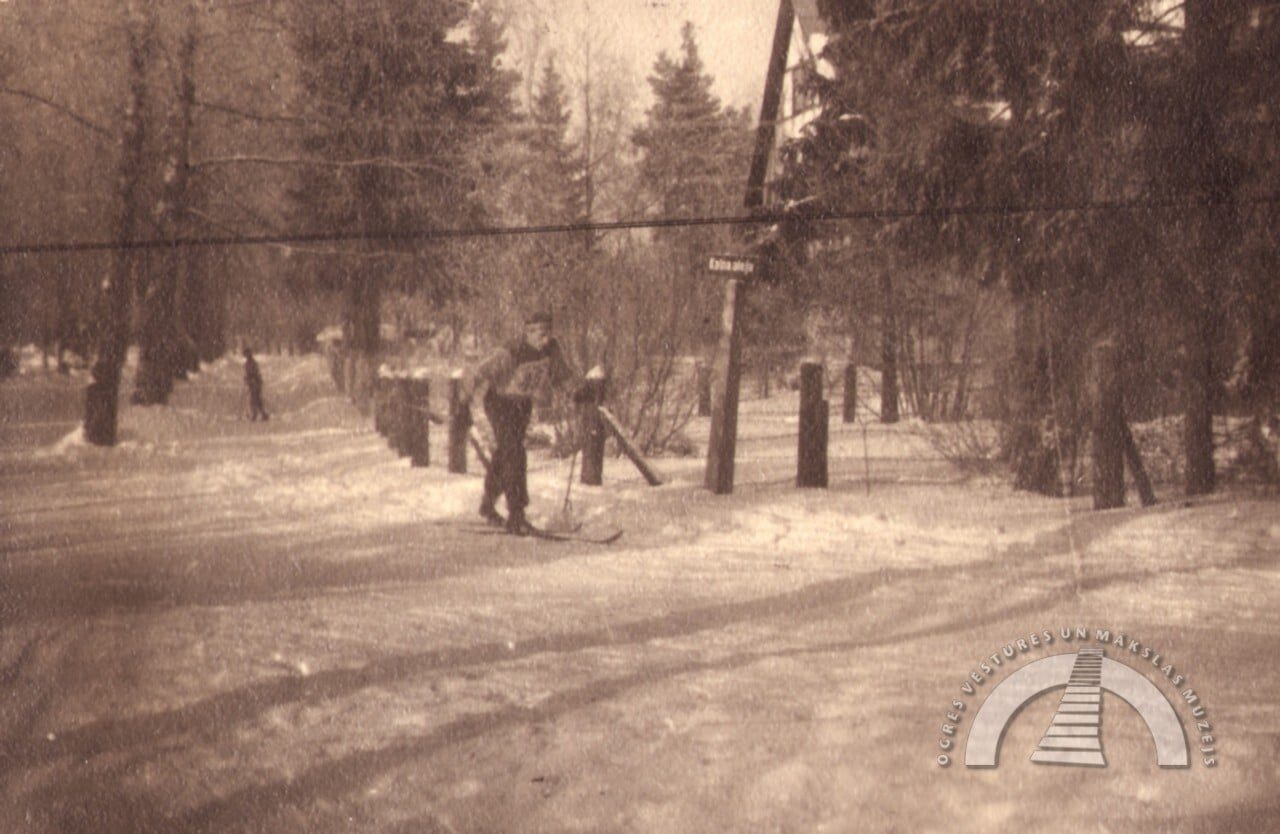
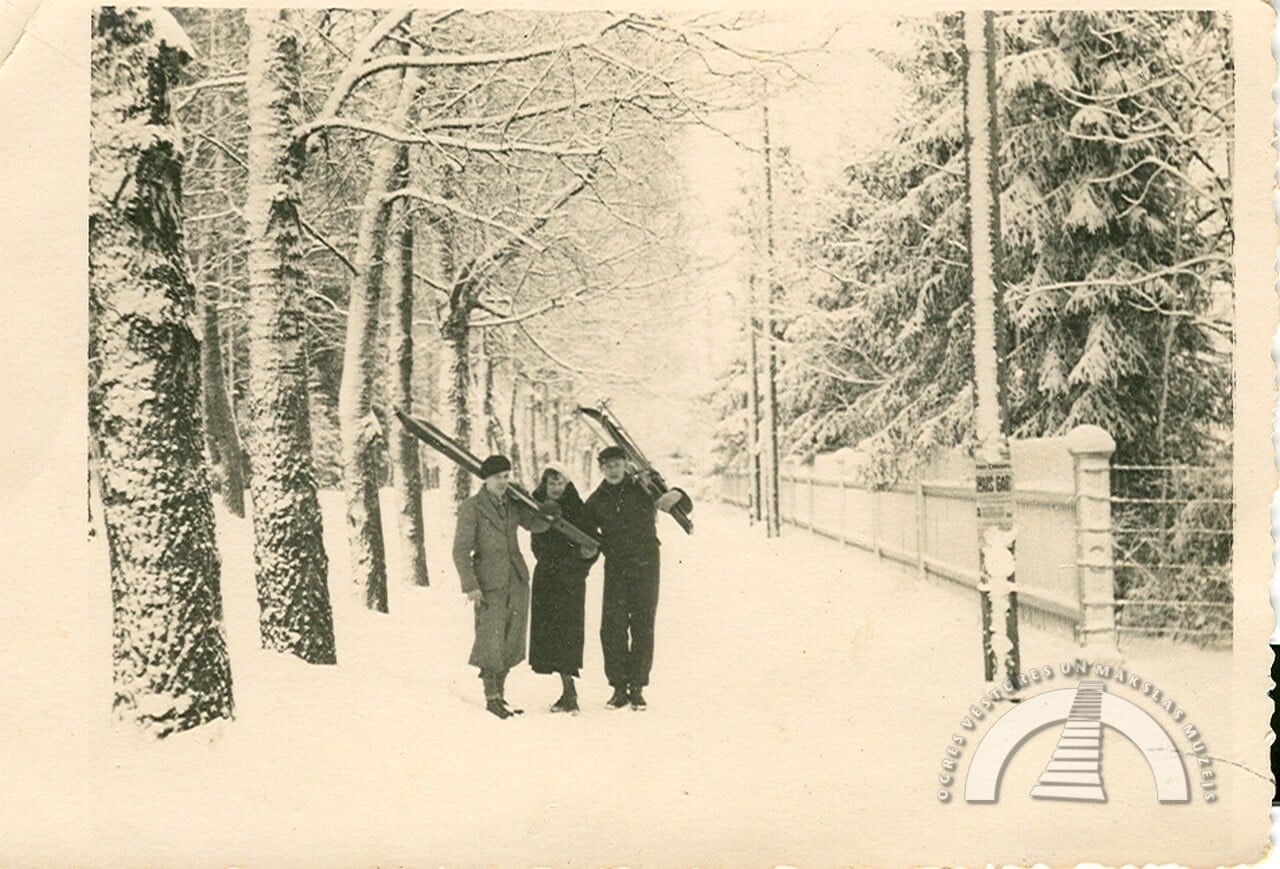
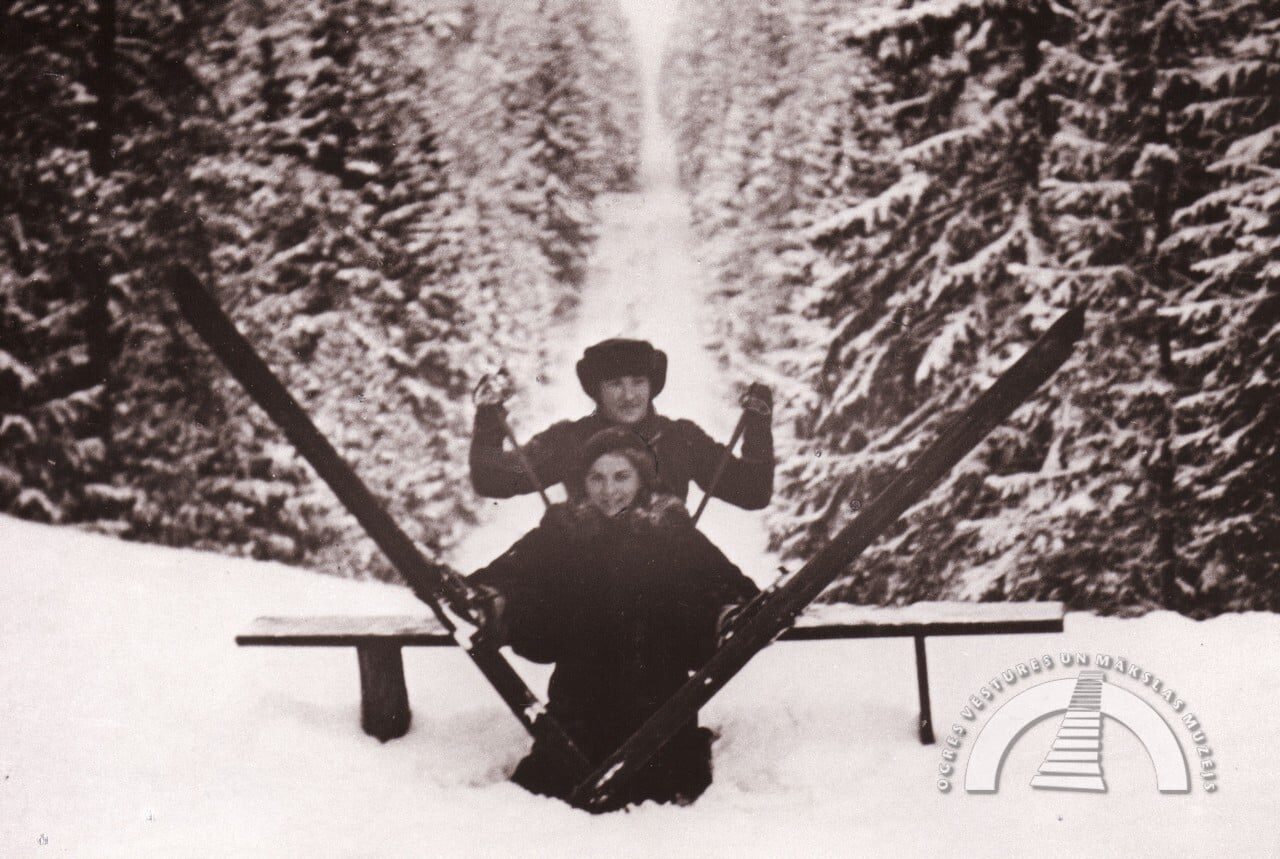
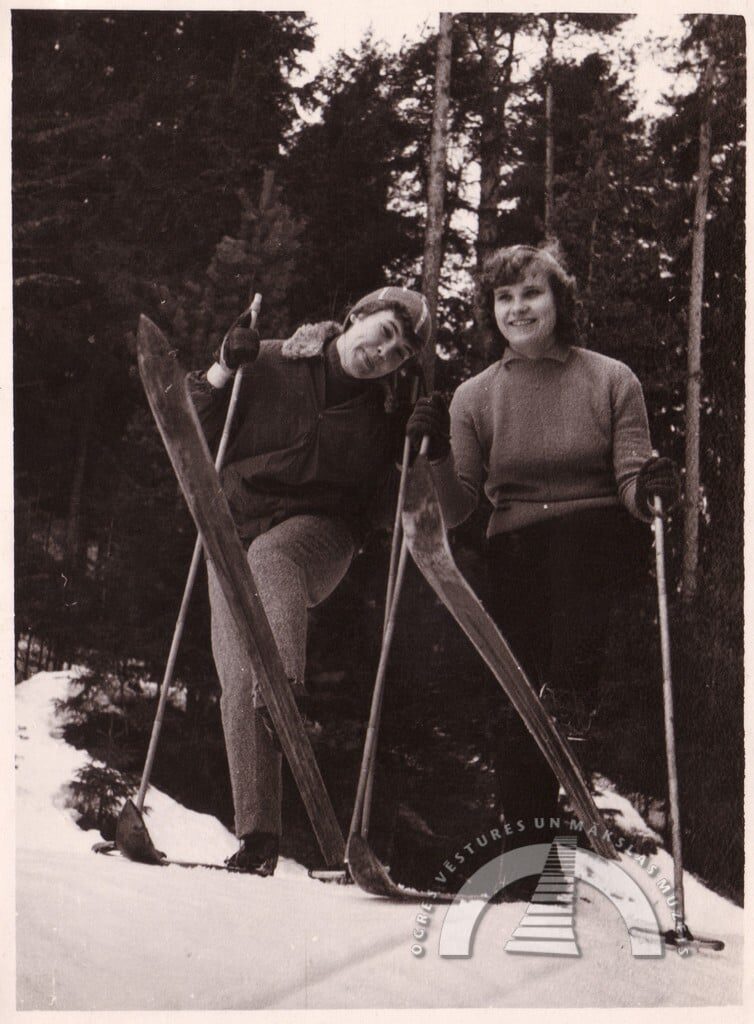
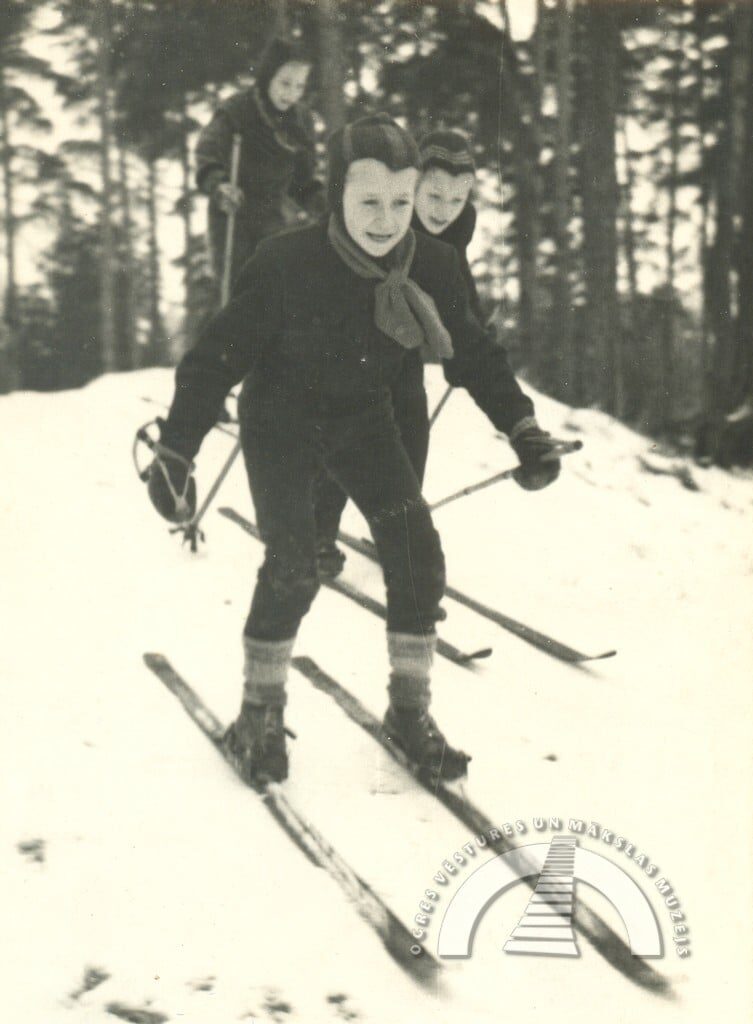
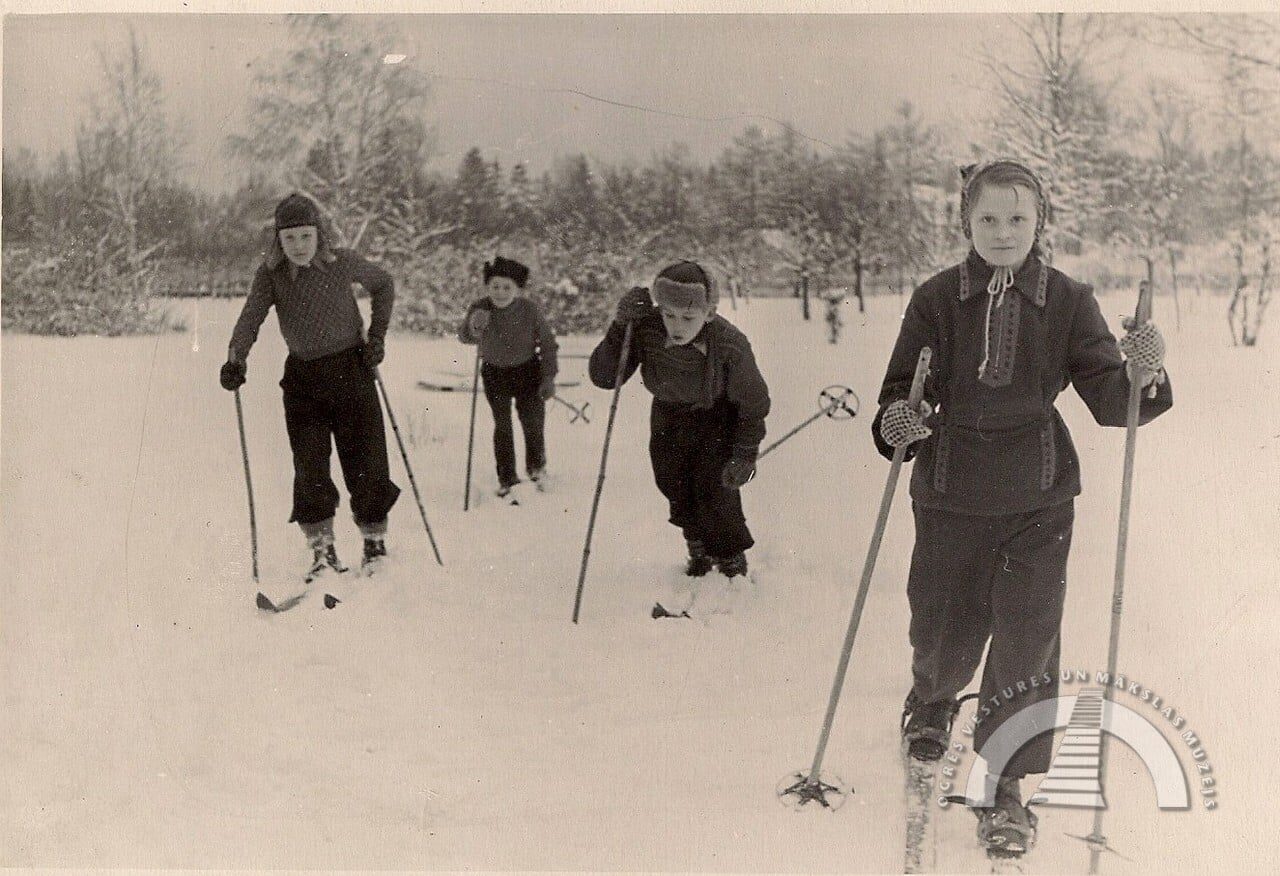
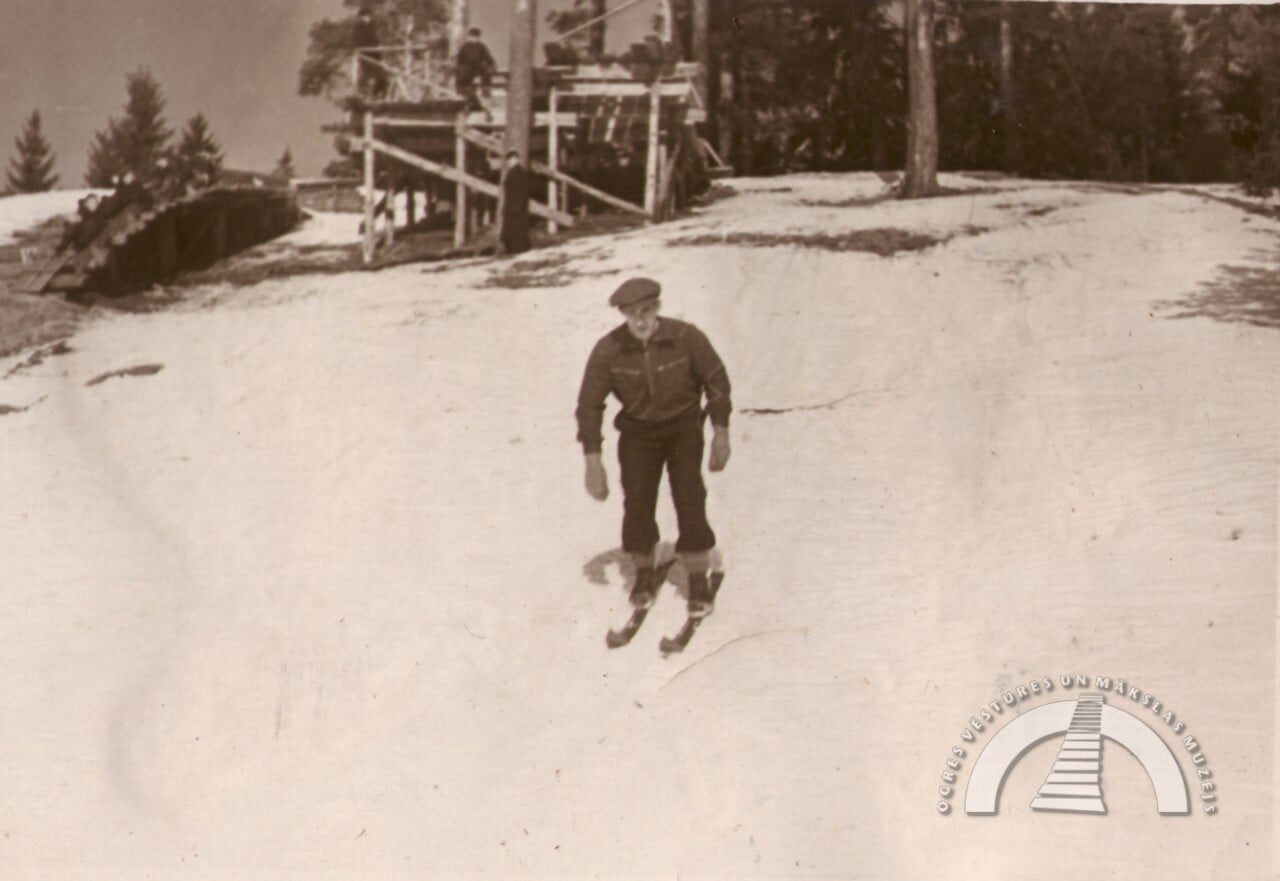
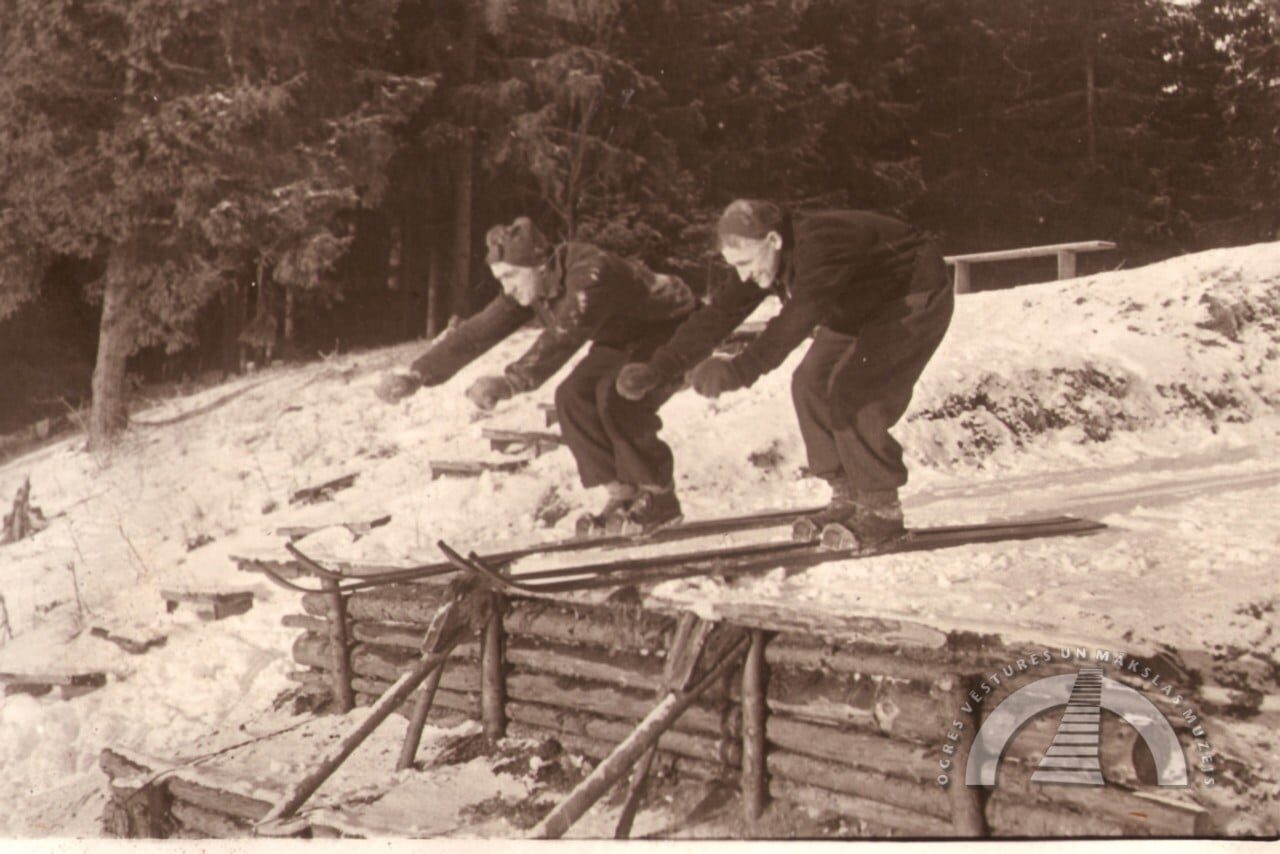
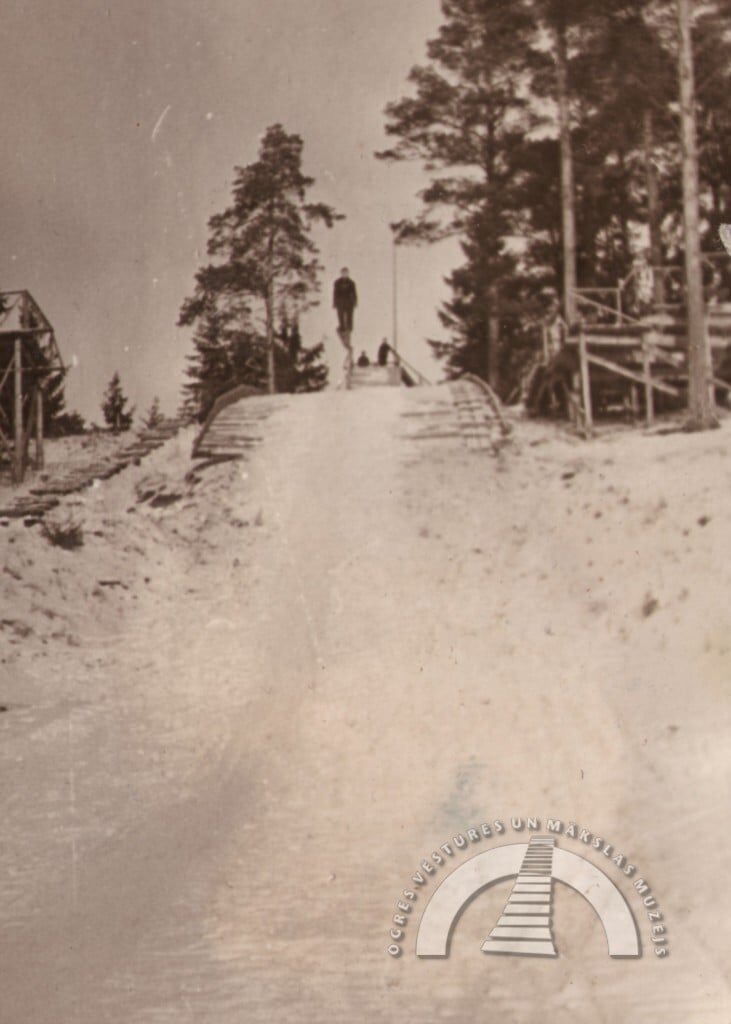
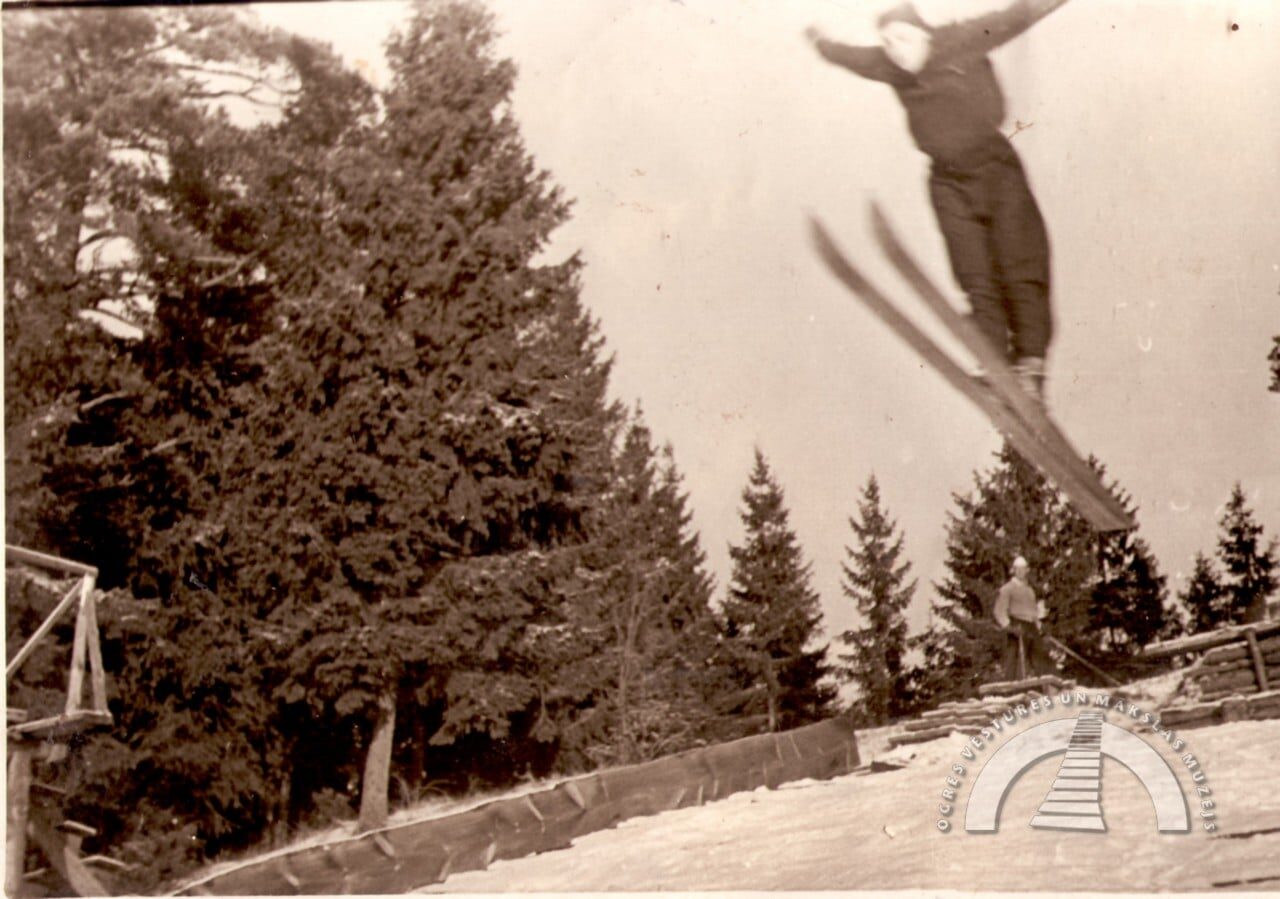
Snowfall is a great joy for winter sports enthusiasts. In winter, the ski track and hills of Ogre’s Blue Hills attract both young and old, so we offer a brief insight into historical events and images related to skiing in Ogre.
Skiing as an outdoor recreational activity became popular in Latvia in the 20th century. In the 1920s and 1930s, it was also referred to in the press as “slēpēšana” (an archaic term for skiing).
“The homeland invites you to visit in winter” – this was one of the advertising slogans encouraging the public to explore Latvia. Various newspapers featured invitations from tourism organisations to visit the best skiing spots, as well as advice on skiing techniques and purchasing equipment. Riga residents had many options, but Ogre’s advantages were its proximity to Riga, cheaper train tickets, and forest shelter in windy weather. Special ski trains were organised on weekends, bringing 600–800 skiers to Ogre. The most popular skiing areas were the Blue Hills (Zilie kalni), Sērķīškalni, and the surroundings of Bāku Hill and Ķentes Hillfort.* Longer routes were also available: Saulkalne–Ikšķile–Ogre and Ogre–Glāžšķūnis–Lielvārde.
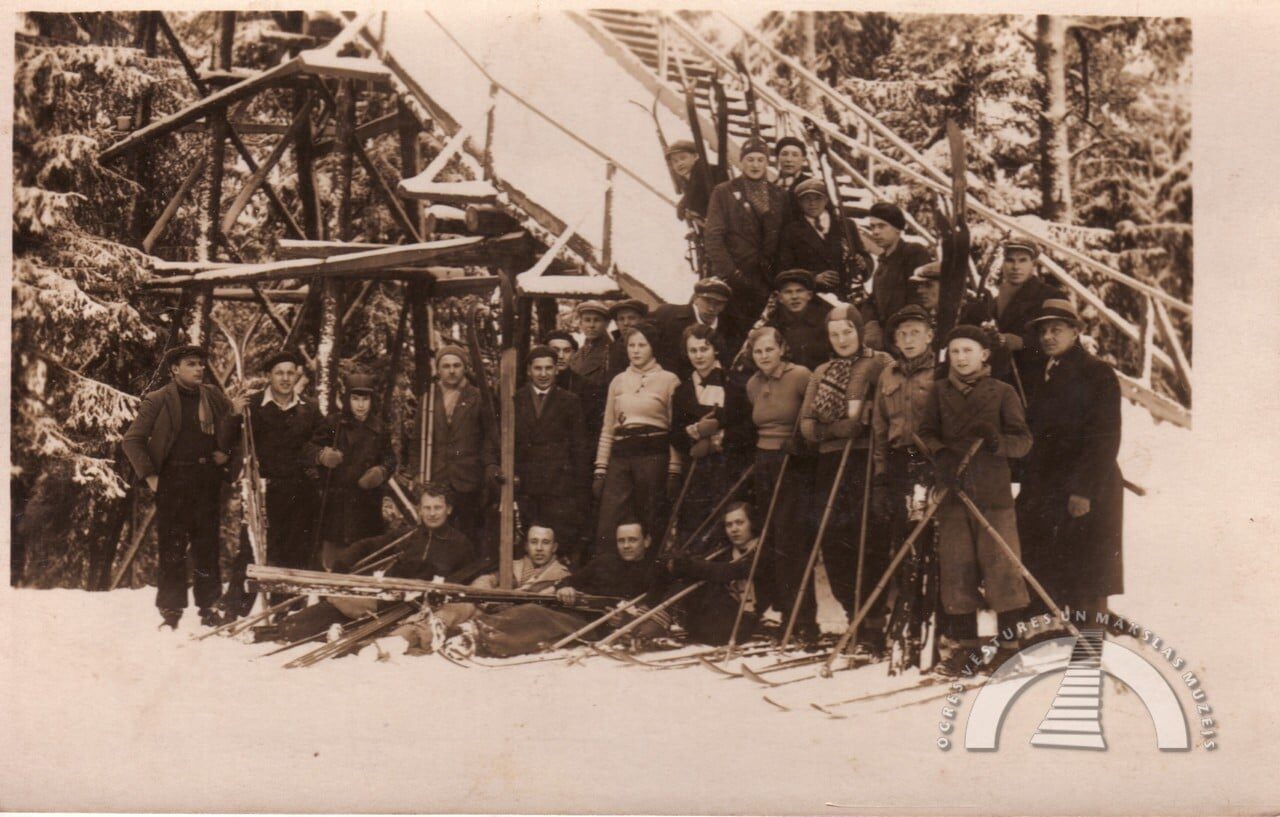
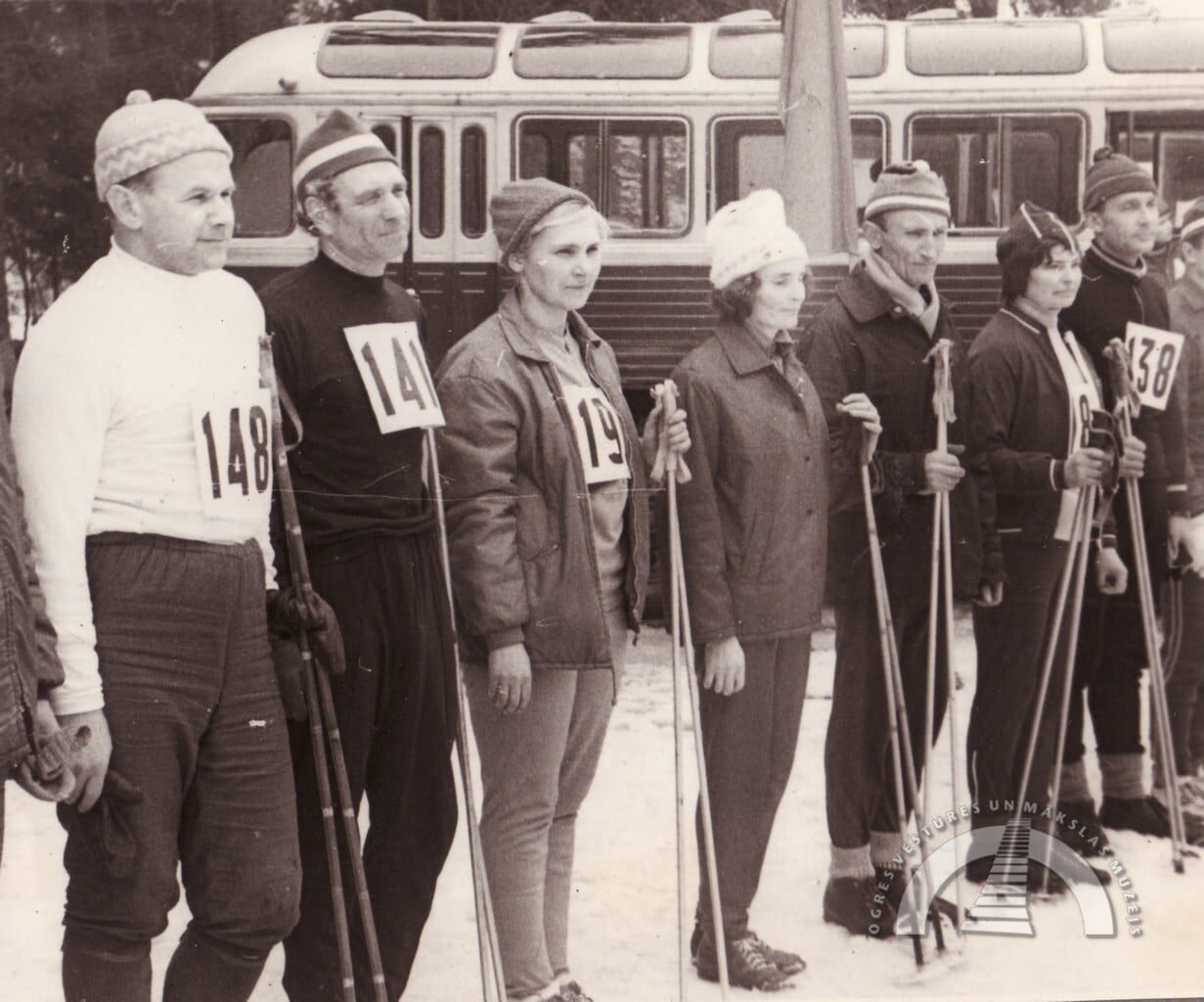
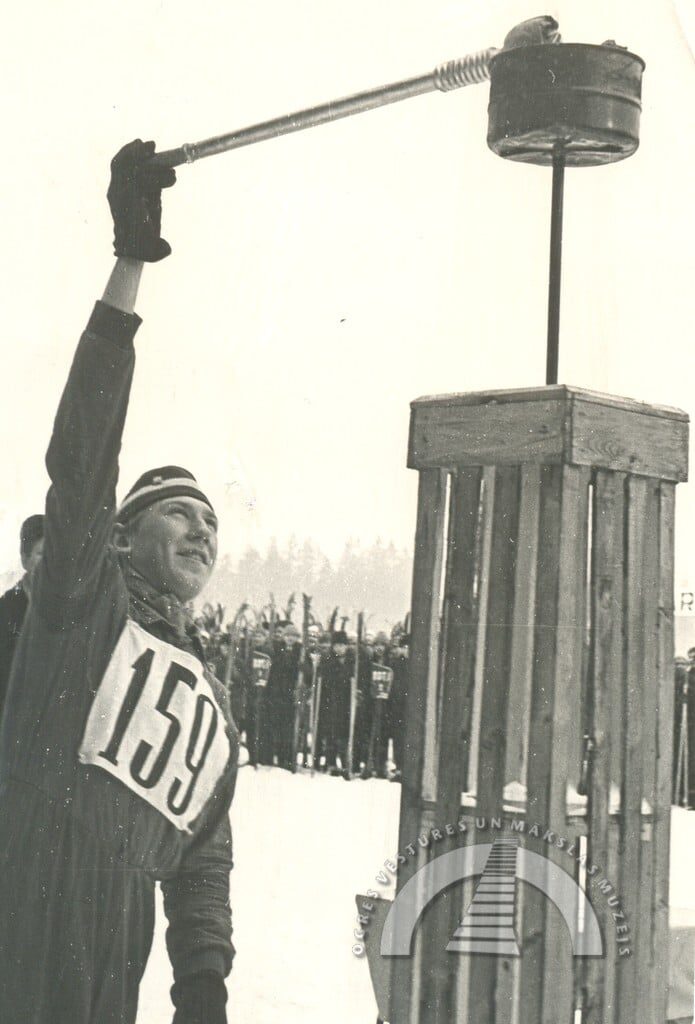
Skiing competitions were held in Ogre and organised by the Riga Ski Club. Professional athletes participated, and events included not only cross-country skiing but also biathlon, slalom, and ski jumping.
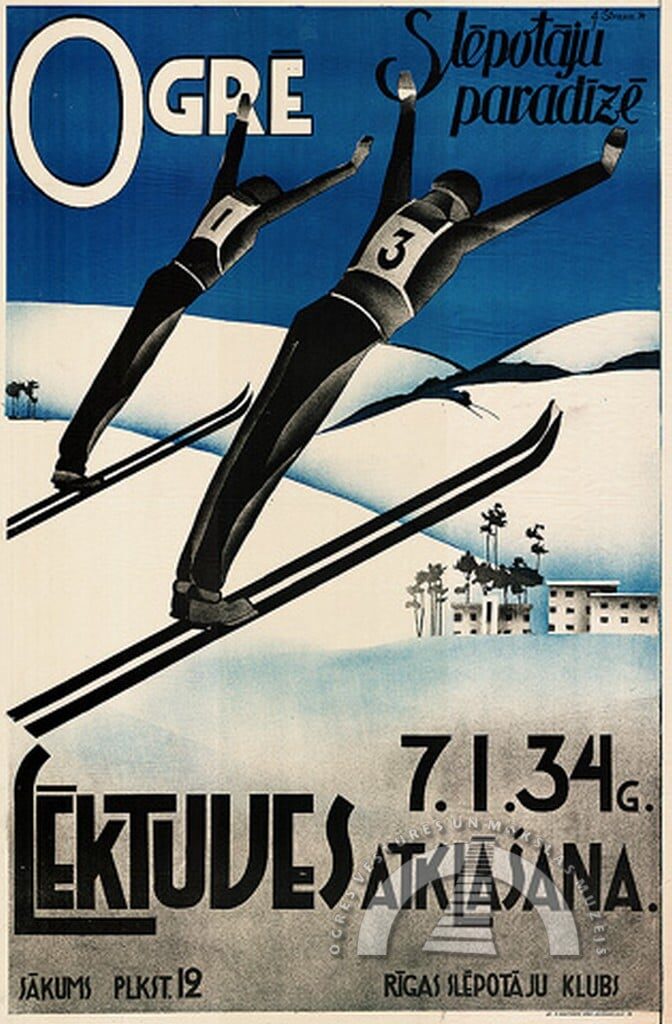
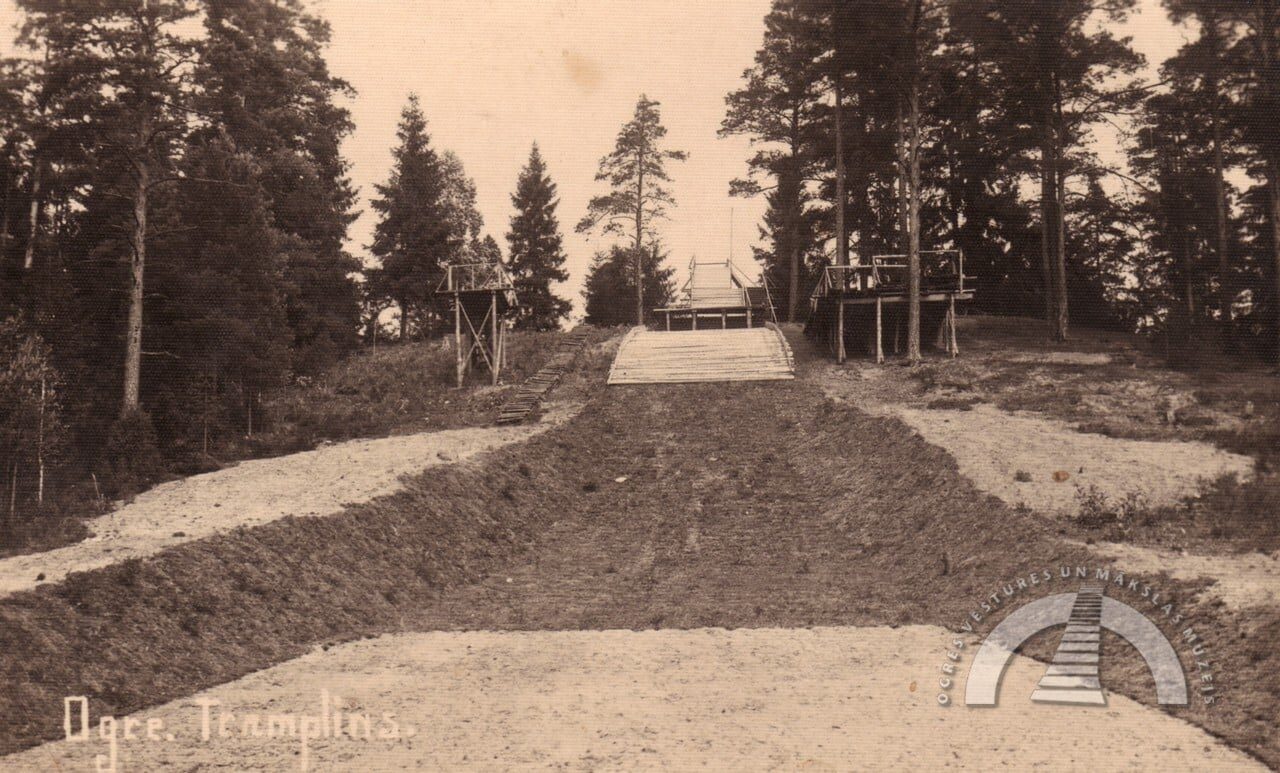
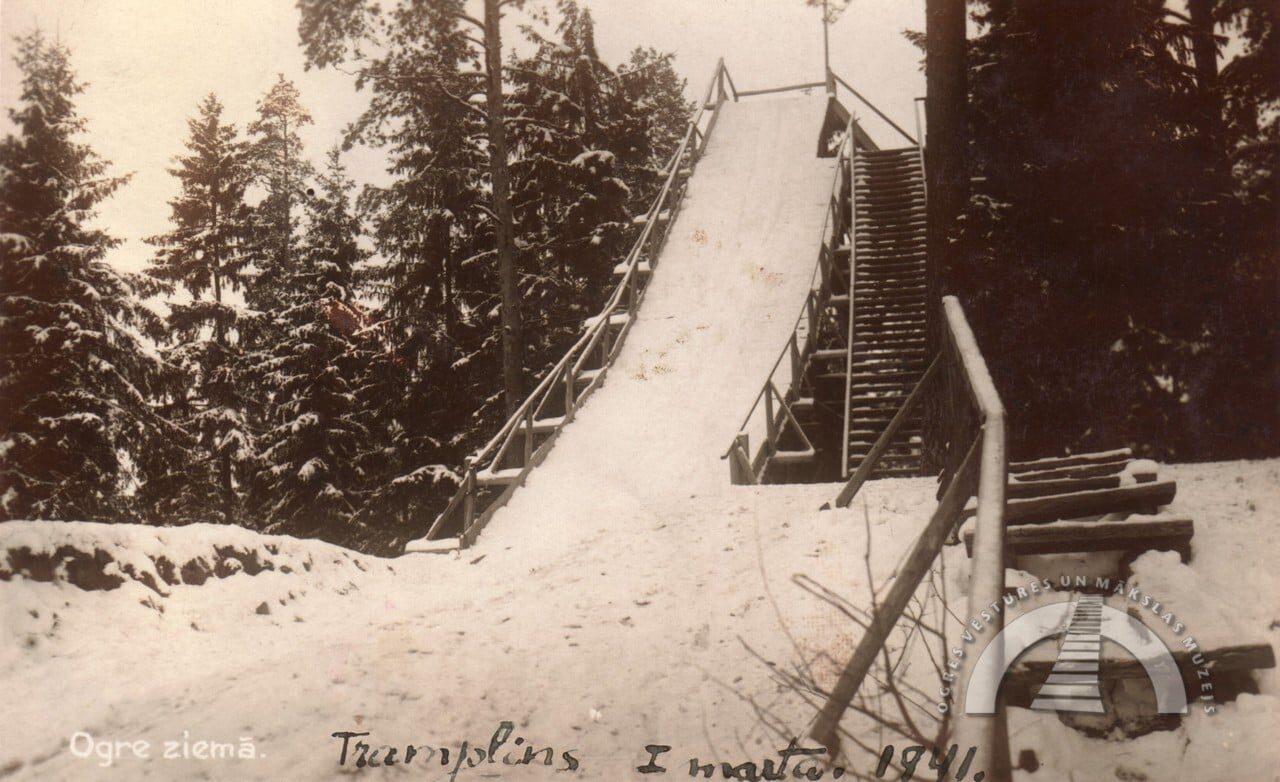
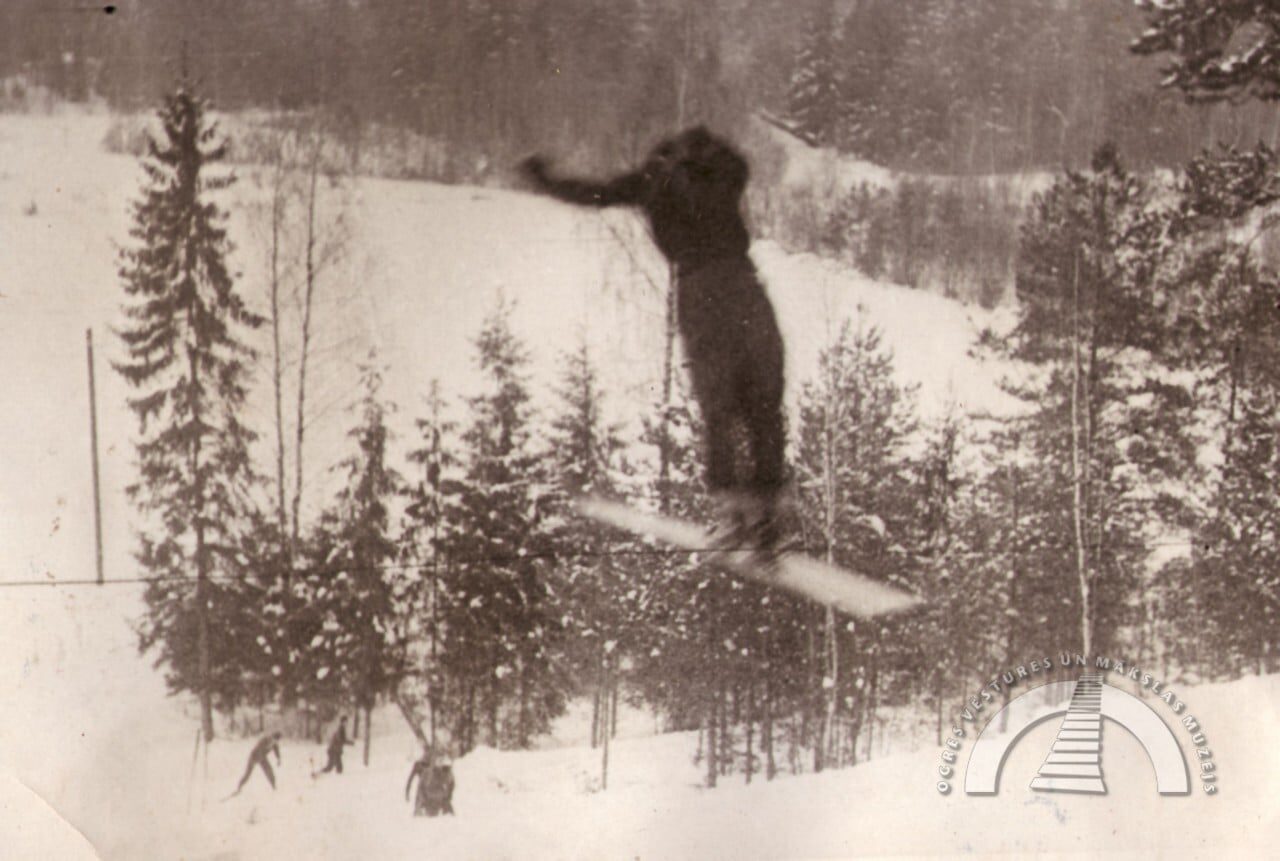
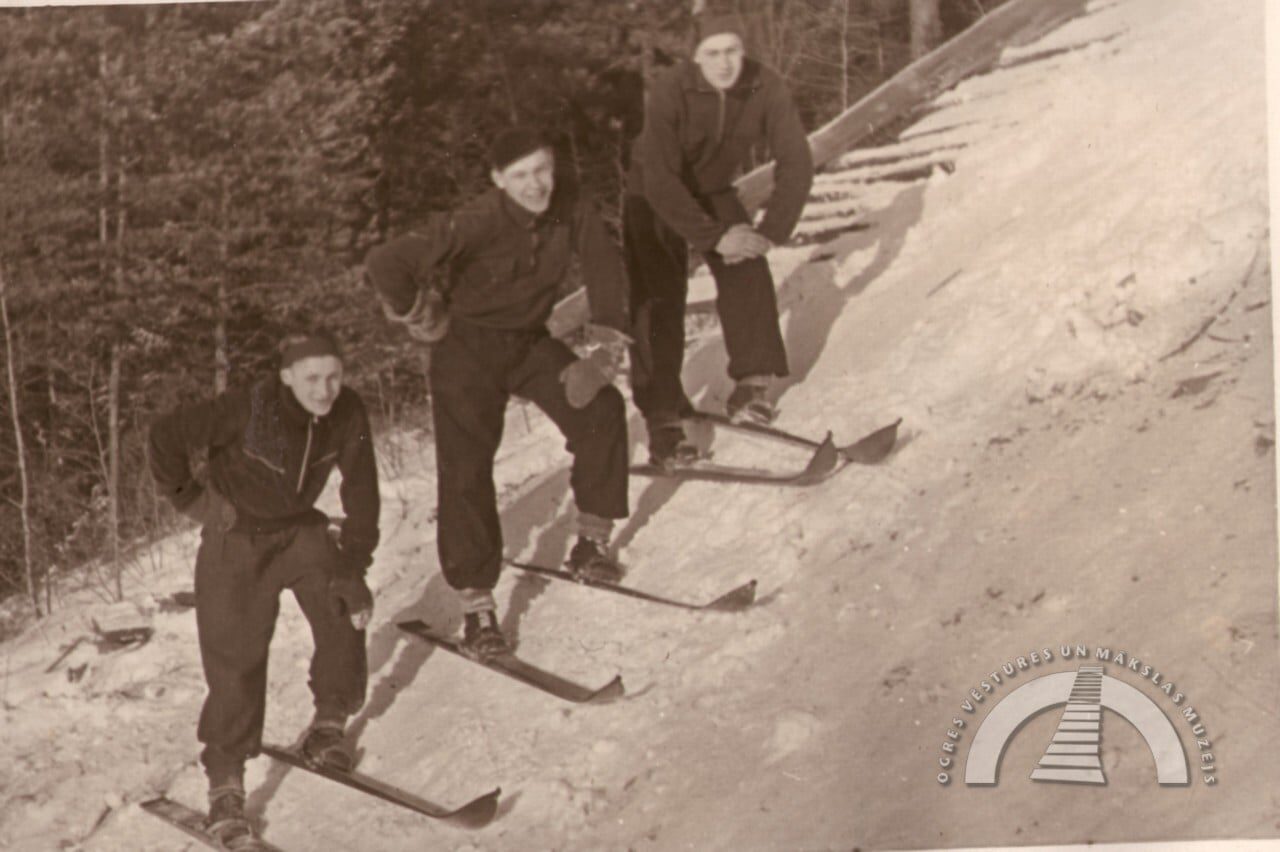
The ski jump in the Blue Hills was opened on January 7, 1934. A stand for judges and spectators and convenient stairs were built next to the jump. At that time, there was also a small jump on Bāku Hill, set up by elementary school pupils. From the large jump, skiers could reach distances of 25 metres; from the small one, 10 metres. The site of the Blue Hills ski jump had once been a hillfort. Following archaeologists’ recommendations, it was not rebuilt there after the end of World War II.
A new ski jump was built in the 1950s on a hill between Tīnūžu and Zvaigžņu Streets. On January 20, 1963, another ski jump was opened near the Ogre 1st Secondary School , on the slope towards Kalna aleja.
Ogre hosted district winter sports competitions in ski jumping, with students from district schools competing for the title of best jumper. The Ogre Ski Jump Cup was also contested, with participation from Latvia’s top ski jumpers. The longest jump recorded in Ogre was 23.5 metres. However, due to the poor condition of the ski jump and increasingly mild winters with little snow, it was no longer used by the 1970s.
Ski jumping traditions in Ogre were revived by coach and ski jumping enthusiast Modris Krūze. In 2007, he built 5-, 10-, and 15-metre ski jumps on his private property on Kranciema Street. The artificial surface allows training throughout the year. There are future plans to build even larger jumps, making possible jumps of up to 50 metres.
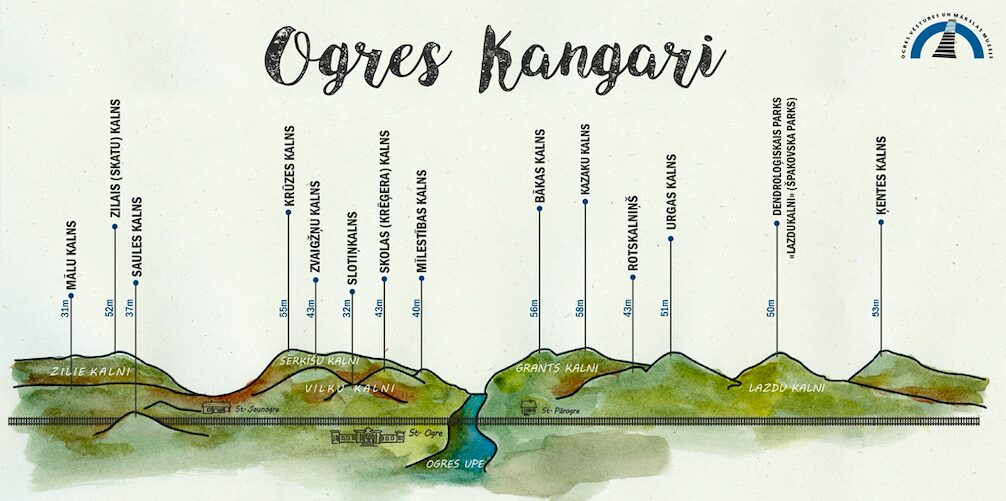
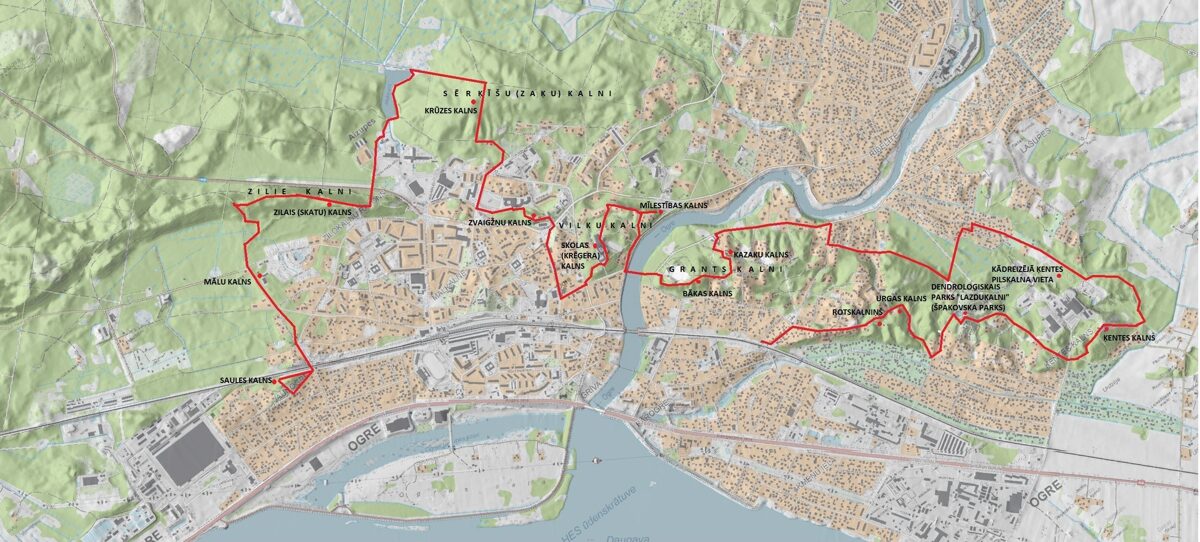
“OGRE KANGARI” HIKING TRAIL
We invite you to explore the hiking trail to better discover the hills of Ogre. View the photo gallery and read the story on the museum's website or Facebook page. By looking at historical images, you can compare how the city has changed over time. We have marked the route in the "BalticMaps" map browser. The “GPX” file is convenient to use with the LVM GEO mobile app. The total length of the hiking trail marked on the map is 14 kilometers (7 kilometers in Pārogre and 7 kilometers in Ogre center and Jaunogre). The hiking trail winds through both the urban part of the city (with asphalt, cobblestone, and gravel surfaces) and green areas (park paths and pedestrian-trodden forest trails without special amenities).