
Solo Exhibition “Light” by Painter and Educator Silvija Ausma Jākobsone
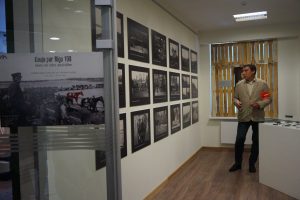
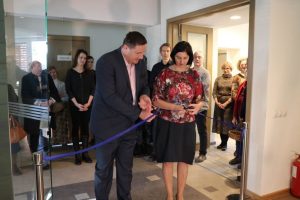
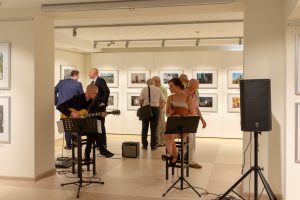
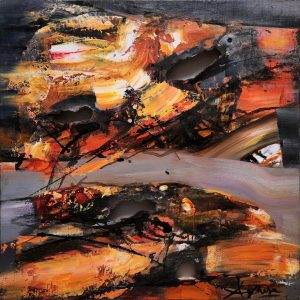
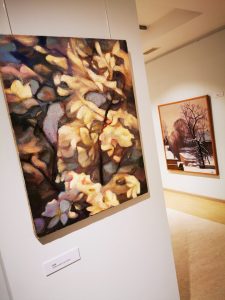
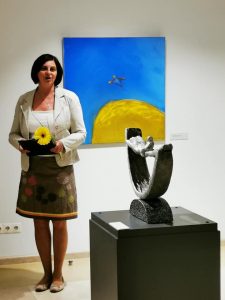
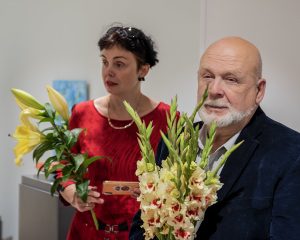
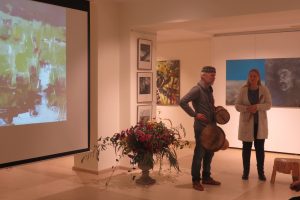
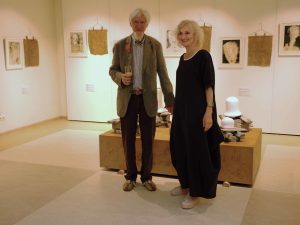
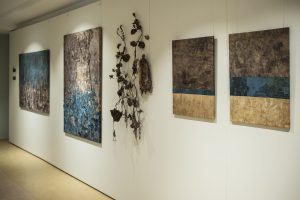
On December 6, the Ogre History and Art Museum opened the exhibition “Light”, introducing visitors to the paintings of artist and educator Silvija Ausma Jākobsone. This exhibition is the first retrospective of the artist’s works on such a scale, with most of them being exhibited for the first time. The works span the period from […]
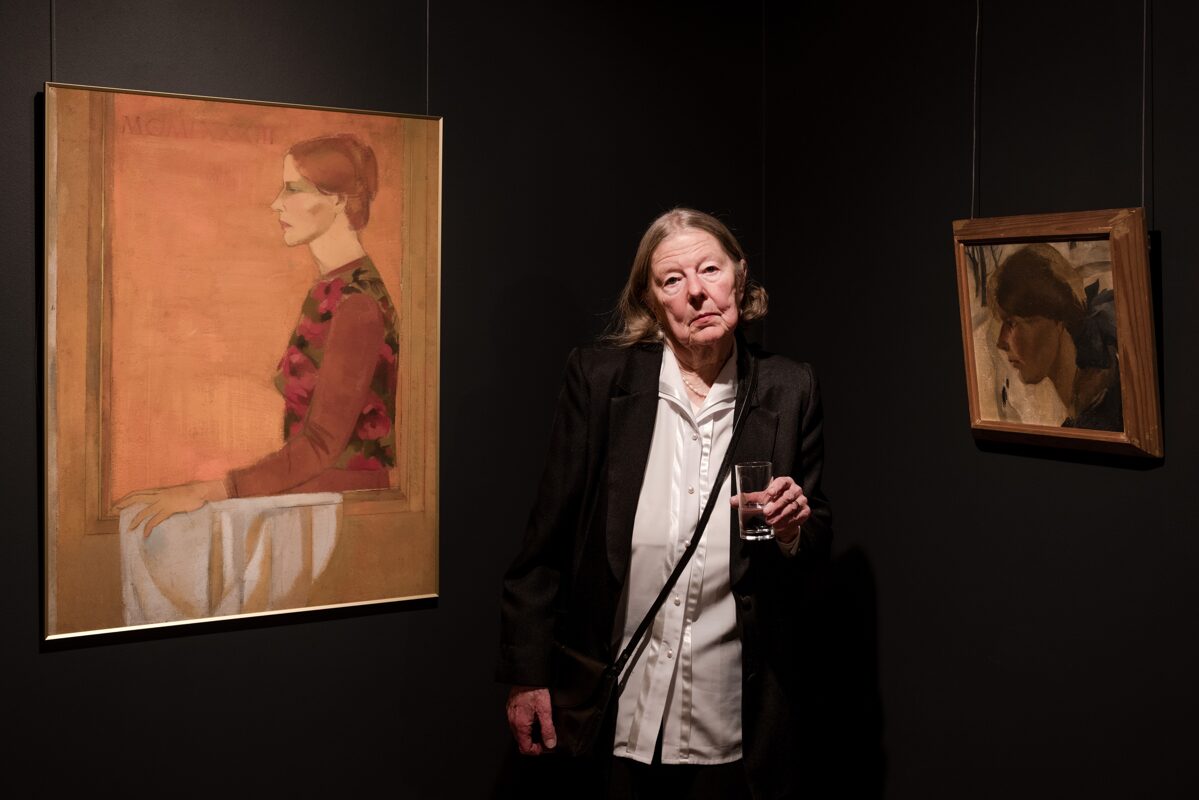
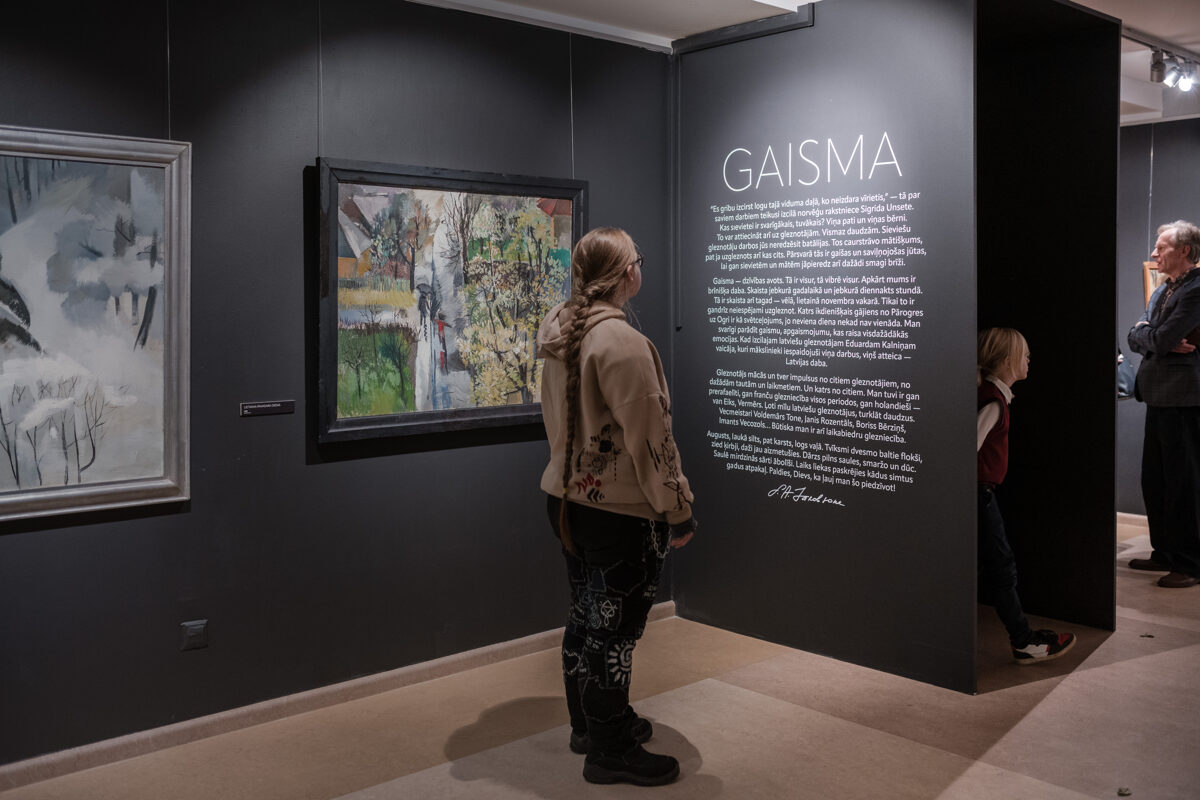
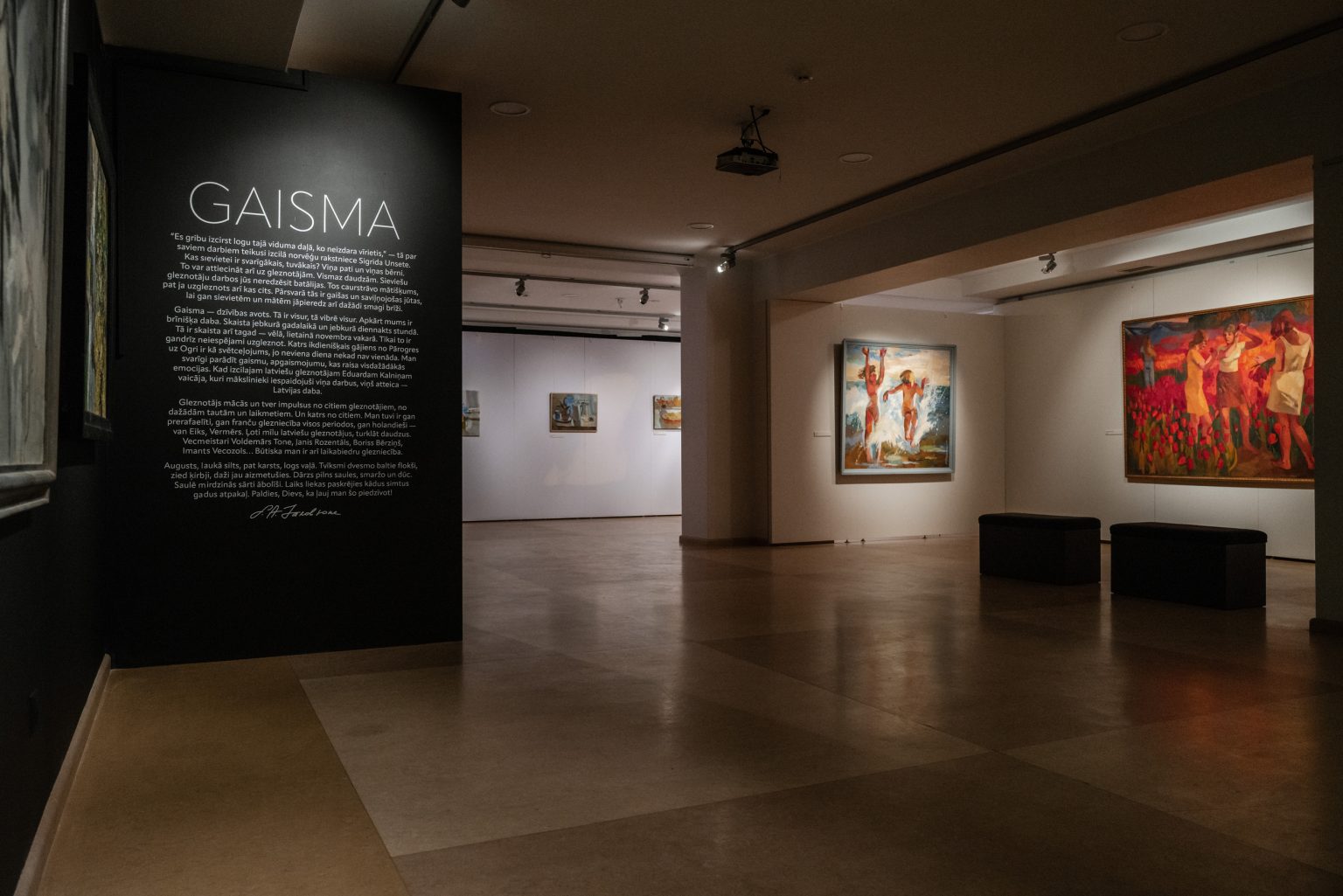
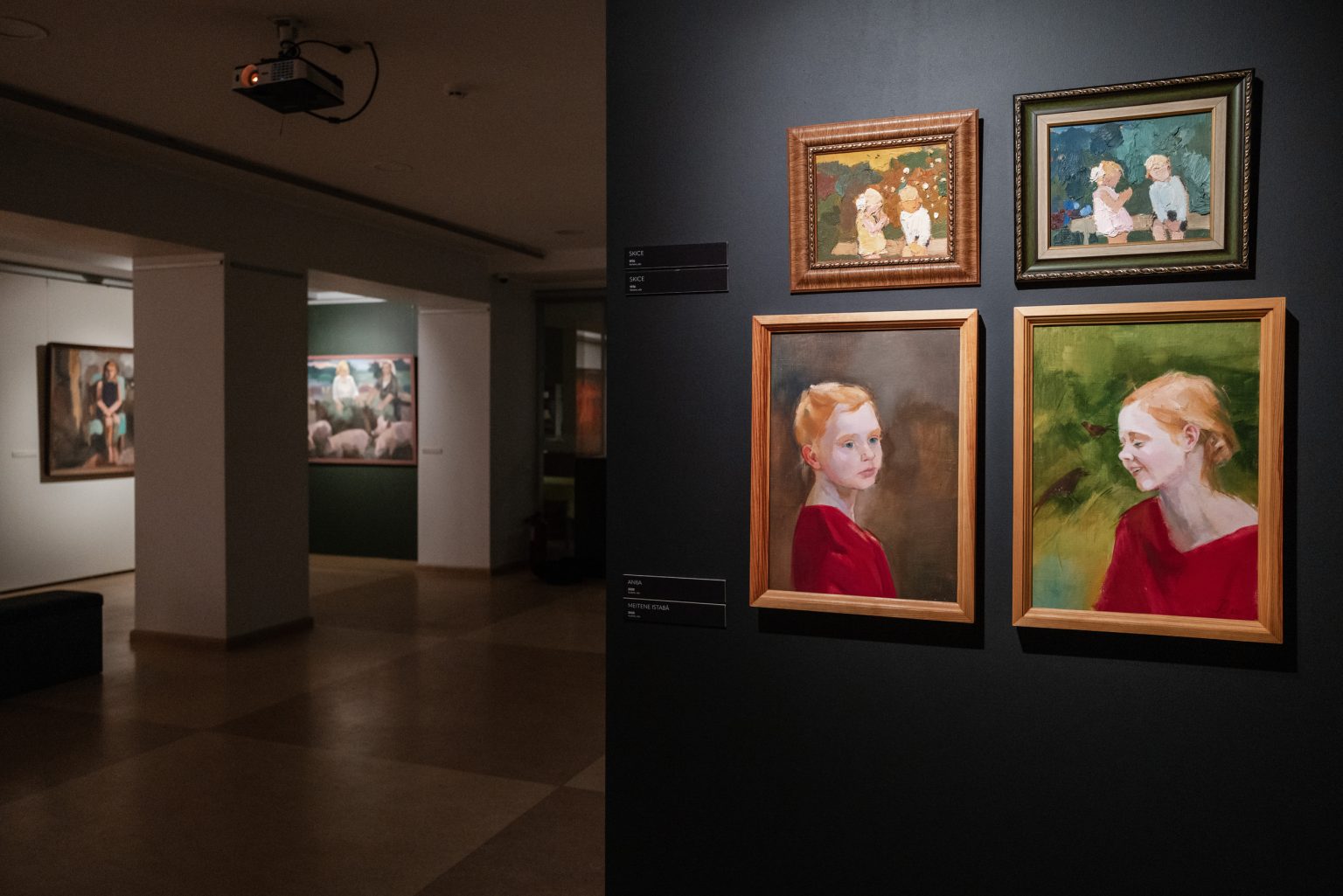
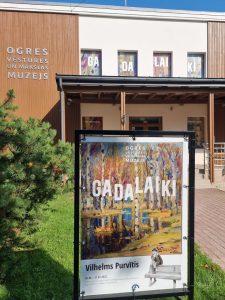
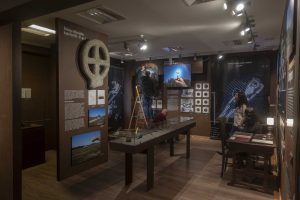
On December 6, the Ogre History and Art Museum opened the exhibition “Light”, introducing visitors to the paintings of artist and educator Silvija Ausma Jākobsone.
This exhibition is the first retrospective of the artist’s works on such a scale, with most of them being exhibited for the first time. The works span the period from 1966 to the present day. Silvija Ausma Jākobsone’s painting style has been influenced by her studies with old masters such as Konrāds Ubāns, Boriss Bērziņš, Imants Vecozols, and Eduards Kalniņš. A significant aspect of Silvija Ausma Jākobsone’s art over the last thirty years has been the sacred. Her altarpiece painted for the Jumprava Lutheran Church is noteworthy. Silvija Jākobsone has worked as an educator for over thirty years and believes she has invested more in her students than in her own creative work. For the past eight years, she has lived and painted in Ogre, passionately continuing to perfect her professional skills.
The exhibition “Light” at the Ogre History and Art Museum was on display from December 6, 2024 until February 21, 2025.
“I like all painting styles, including abstraction and contemporary art – absolutely everything – but I lean more towards the old masters. One could say my style is realism. Realism in various manifestations, quite lively and joyful. I enjoy painting absolutely everything: portraits, genre scenes, nature – everything.”
Silvija Ausma Jākobsone has always sensitively encouraged her students to develop their creativity, experiment, and seek the best form of expression for their individuality. For this reason, her painting classes were among the most anticipated subjects for many. Her students have included numerous well-known personalities: Ainars Mielavs, Aivars Vilipsōns, Inese Brants, Guntars Sietiņš, Vilis Daudziņš, and others.
Silvija Ausma Jākobsone was born in Riga in 1945. She graduated from the Jānis Rozentāls Art High School and studied at the Painting Department of the Art Academy of Latvia (LMA). In 2003, she obtained a Master’s degree in Humanities. She worked as a painting lecturer at the Riga College of Applied Arts (1974–2002) and at the Latvian Christian Academy (1997–2002). At both institutions, she developed teaching methodologies and curricula. In 2003, she was elected Associate Professor at a meeting of the LMA Council of Professors. She has been a member of the Artists’ Union of Latvia since 1975 and has participated in exhibitions since 1970. Her works are held by the Ministry of Culture of Latvia and in private collections in Latvia, Austria, Great Britain, France, the USA, and elsewhere.
Exhibition curator: Elīna Cērpa
Exhibition scenographer: Ineta Sipunova.
Photo: Oksana Okmi Mizgajeva
Beyond Time
Author: Artist, researcher Ph.D. Rita Broka, Ikšķile 2025
The exhibition Light, organised at the Ogre History and Art Museum, stands out as a significant event not only on the region’s cultural map. It also holds special meaning in the life of its author, painter and art educator Silvija Ausma Jākobsone, as it is her first full-scale solo exhibition. The path to this exhibition has spanned an entire creative lifetime, revealing itself to the viewer both as a retrospective of professional achievement and as a diary of an era shaped by personal experience. It offers a glimpse into a unique story, carefully gathered and preserved over time. Importantly, this is not a narrative of dramatic shifts, abrupt stylistic changes or relentless searches for new forms of expression. Rather, it is a testament to the refinement of painting, cultivated over many years and polished to a golden glow – its true value revealed only through the continuity of time. Within the exhibition unfold scenes from both earlier and more recent periods, imbued with luminous colour and brought to life through the harmonious vitality of the artist’s brushstrokes. It also reveals the ever-renewing, resonant face of the future, shimmering like sky-blue bells in bloom.
Silvija Ausma Jākobsone was born, raised and spent most of her life in Riga. From early childhood, drawing was her greatest passion, and thanks to an admission announcement noticed by her parents at the right time, she successfully passed the entrance competition and began her art education at Jānis Rozentāls Art School after the fourth grade. The artist recalls this period of study as an oasis of intellectual freedom – a protected circle of like-minded individuals devoted to professional growth, where the surrounding socialist reality became merely an insignificant and neutral background. Her further education led her to the Art Academy of Latvia, where she studied painting for six years under the guidance of the most prominent art figures of the time. Among those who influenced her are major names in Latvian art, including Boriss Bērziņš, Konrāds Ubāns, Leonīds Breikšs, Indulis Zariņš, Edgars Iltners and Arvīds Egle. In terms of artistic expression, the author feels drawn to the Italian Quattrocento, French painting of various periods, and the Dutch masters – Jan van Eyck and Johannes Vermeer – as well as the Latvian old masters. Each of these artists, in their own way, has influenced her development, the direction of her creative thought and her search for imaginative expression. They likely also served as examples in Jākobsone’s pedagogical work, to which she devoted thirty-eight years of her life. Patient, demanding, and at the same time wise and supportive, she introduced several generations of young artists to the art of painting at the Riga Design and Art Secondary School and at the Latvian Christian Academy. The artist has also made a significant contribution to the development of sacred art, creating altarpieces for the Evangelical Lutheran churches of Jumprava and Ārlava.
Among the significant circumstances shaping her creative path, it should be noted that at the very beginning of her professional career the artist had already become a mother. This essential aspect of a woman’s life therefore naturally and inevitably emerged in her painting as a deeply engaging theme, filled with personal emotion. As a constant and inseparable thread in her perception of existence, it reveals itself in portraits, landscape motifs and scenes inspired by everyday life. All are united by a distinctly precise and artistically sensitive capture of a moment rescued from the endless rhythm of daily concerns. The composition In the Water (1979) fully embodies such a warm and luminous moment, suffused with the joy of summer freedom. The painting depicts a familiar seaside scene: city children, having finally encountered the long-awaited, boundless blue of the water, rush into the shallow waves. Their sun-warmed, light-filled bodies, the white-golden splashes, and the clear, ringing bursts of laughter awaken in the viewer a sparkling sense of joy and liberation Perhaps this feeling is akin to what the artist herself experiences when, stepping away from the intense current of family life, she finds fulfilment in moments devoted to her long-deferred creative aspirations.
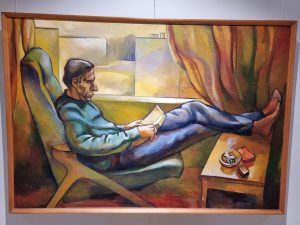
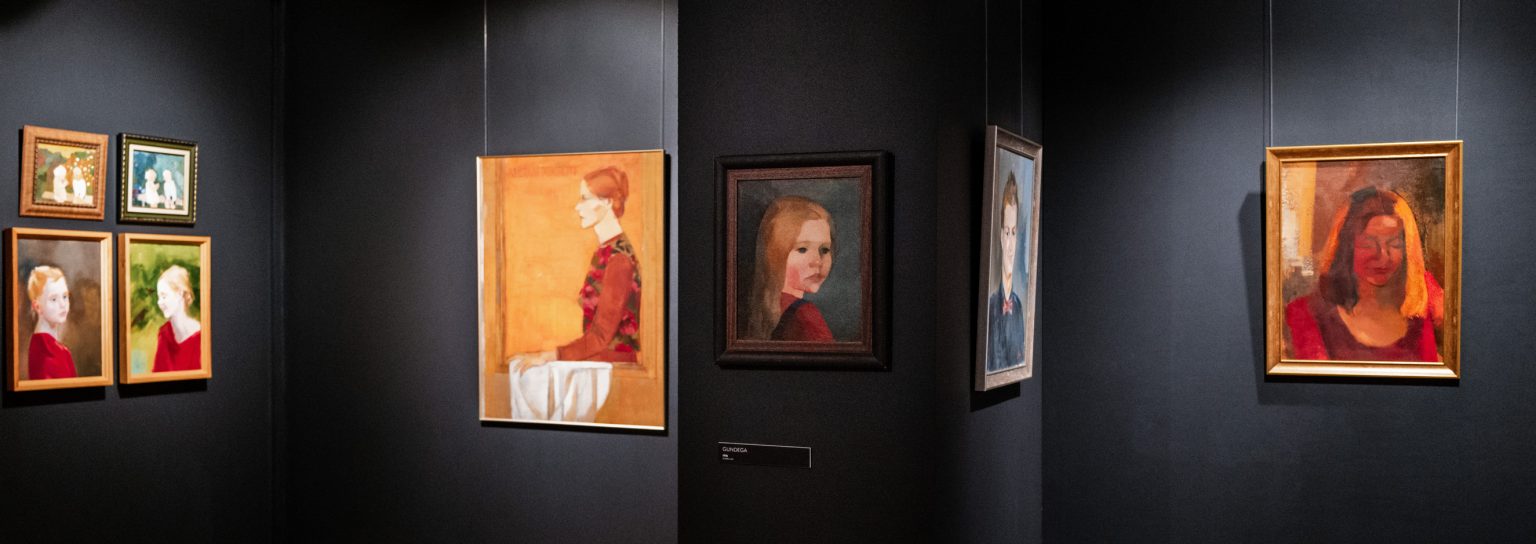
Turning to the exhibition’s content, the artist’s painted portraits are worth examining first, particularly her self-portraits. The earliest of these was painted in 1966, at the start of her studies at the Art Academy of Latvia. The background of a snow-covered winter landscape expressively illuminates the youthful girl’s face, turned in profile. Her concentrated gaze, focused with deliberate seriousness, is fixed on a particular point, striving to maintain the expression required for the portrait’s intention. Interestingly, there is no trace of girlish frivolity or mischief, which we often see in the faces of young people just reaching adulthood. In stark contrast is the self-portrait the artist painted seventeen years later. The woman, seated sideways, appears reserved, focused, quiet, and introspective: now, it is the face of an adult woman shaped by the burden of worries, having experienced both joy and sorrow. The carefully twisted hair bun accentuates the slender line of her neck and the stubbornly unyielding, dignified posture of her body. The shimmering golden background, as if borrowed from an icon, prevents the gaze from wandering into the depths of the colour field and instead draws the viewer’s attention to the fine details of the painted figure’s floral fabric attire, the white, cascading folds, and the restrained line of her hand. This hand, resting gently against the edge of the valuable frame like a feather from a celestial dove, seems poised to rise in a sanctifying gesture. In contrast, the self-portrait Evening Sun (1985), painted a few years later, feels warmly alive and tangibly feminine. Turned towards the viewer, the woman’s face is partly visible, but her gaze, hidden beneath lowered eyelids, is quietly inaccessible. With a miraculous touch, the evening sun’s golden-russet rays breathe life into the shy figure, illuminating the free fall of her hair, igniting the crimson-clad contours of her body, and sensitively and thoughtfully revealing new paths for reflection in the expressive language of the painting.
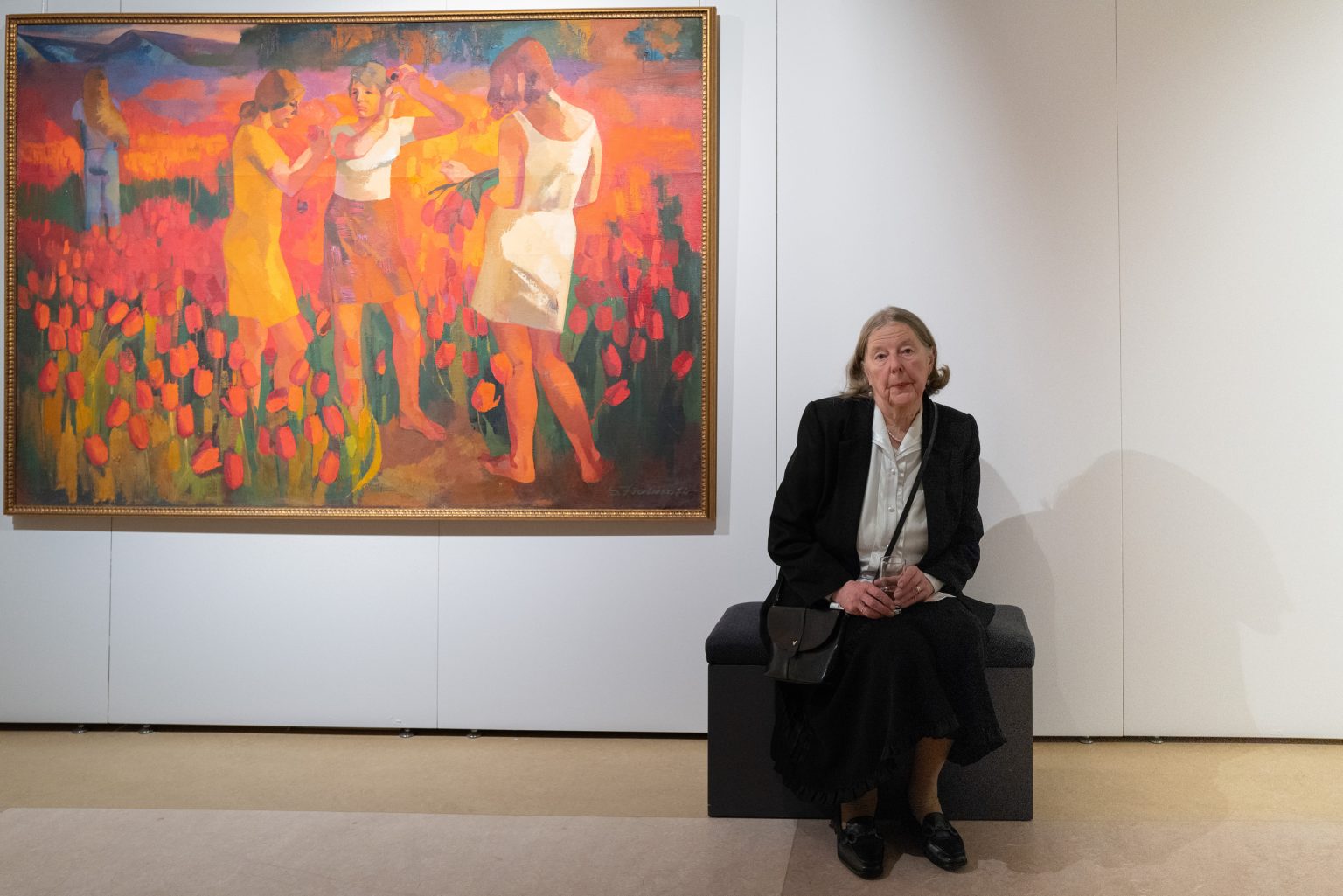
Delving into the narrative lines of Silvija Ausma Jākobsone’s painting, it must be noted that colour consistently serves as the primary source for revealing content in the artist’s works. Even in figurative scenes filled with everyday events, it unmistakably concentrates, guides, and defines the theme embedded in the painting. An example of this is the composition Red Flowers (1974). Three young women are depicted at the centre of the painting. Their casually composed figures are surrounded by a vast field of blooming tulips, awash in the rich blush of spring. The intensely saturated red colour seems to fill every centimetre of the painting’s surface. Waving along with the rows of plant stems outlined by the tulip petals, it creates a mirage of an infinitely vast floral landscape. The distant horizons, fading into multi-voiced purple hues, with magical allure, inspire the search for ever-new imaginative paths. These paths, impatiently pushing through the foreground figures of the women, strive towards lands beyond the horizon, filled with unspoken dreams. Observing this composition, one inevitably recalls its year of creation, the sharply stinging red colour in its title, and the environment, themes, and unavoidable ideological tributes of the era to which it belonged – tributes that everyone wishing to live an open creative life was forced to fulfill. However, in the artist’s execution, these nuances, which today might provoke a wry grimace, take on the role of a casual passerby or a footnote to be used as needed, having only an indirect connection to the truly enduring values of painting that permeate the depicted environment. Precisely for this reason, even when viewed through today’s lens, for example, in the painting Dusk (1985), the foreground is dominated by the mood conveyed in the precisely chosen colour strokes, the coolness brought by the evening peace instilled within it, and the gently rising scent of the earth, which, like a smoothing veil, covers the prosaic presence of the livestock farmers’ fieldwork. The artist’s ability to imbue an everyday moment with a poetic sense of elevation through the painterly power of colour is also revealed in the painting Girl in a Room (1982). In the centre of the composition, rendered in subdued earthy tones, is the figure of a girl sitting alone in a small apartment room. Her fragile, shyly huddled figure is contrastingly framed against the brown-neutral background of the surrounding environment by the bright blue chair cover, which, like a newly bloomed, long-awaited spring flower amidst a dormant surrounding, unmistakably attracts and holds the viewer’s gaze for as long as possible.
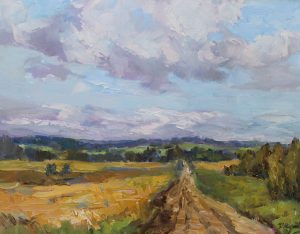
The changing seasons in landscapes, gardens, flowers, and still life are themes that can be described as a persistent, even existentially necessary leitmotif in Jākobsone’s creative work. This is evident in all stages of her development and in the painting techniques she employs. The landscapes exhibited – Winter (1979), Spring in the Garden (1981), Rainy Spring Day (1983) – reveal the artist as a sensitive observer of natural processes, perceiving the phenomena within them and the various states created by changes in lighting as stimulating impulses for reflection dedicated to light in colour. In the artist’s perception, light is the source of life. It is everywhere, it vibrates everywhere. Nature is also wonderful – beautiful in every season and at any time of day. This conviction is clearly revealed in the natural motifs brought to life in her paintings, which allow one to traverse, in the form of a landscape overview, the familiar paths of small gardens in the Riga-Jūrmala area. Here, ancient apple trees, closely clustered like groups of like-minded individuals, raise their faded, noble, time-hardened forms. One can also witness, with genuine surprise, courtyard trees transformed overnight into strange fairy-tale giants, covered in heavy snowdrifts, and the early rush of city dwellers awakened by the rain of a brightly green spring day.
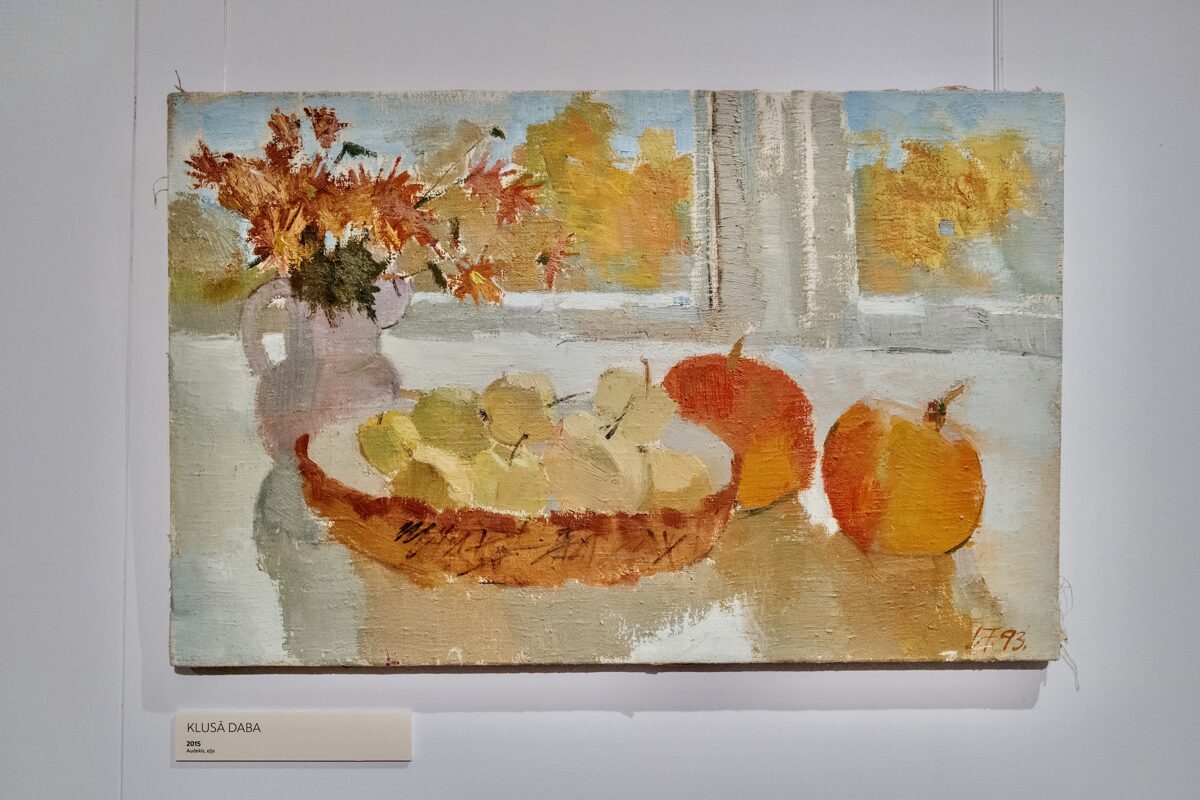
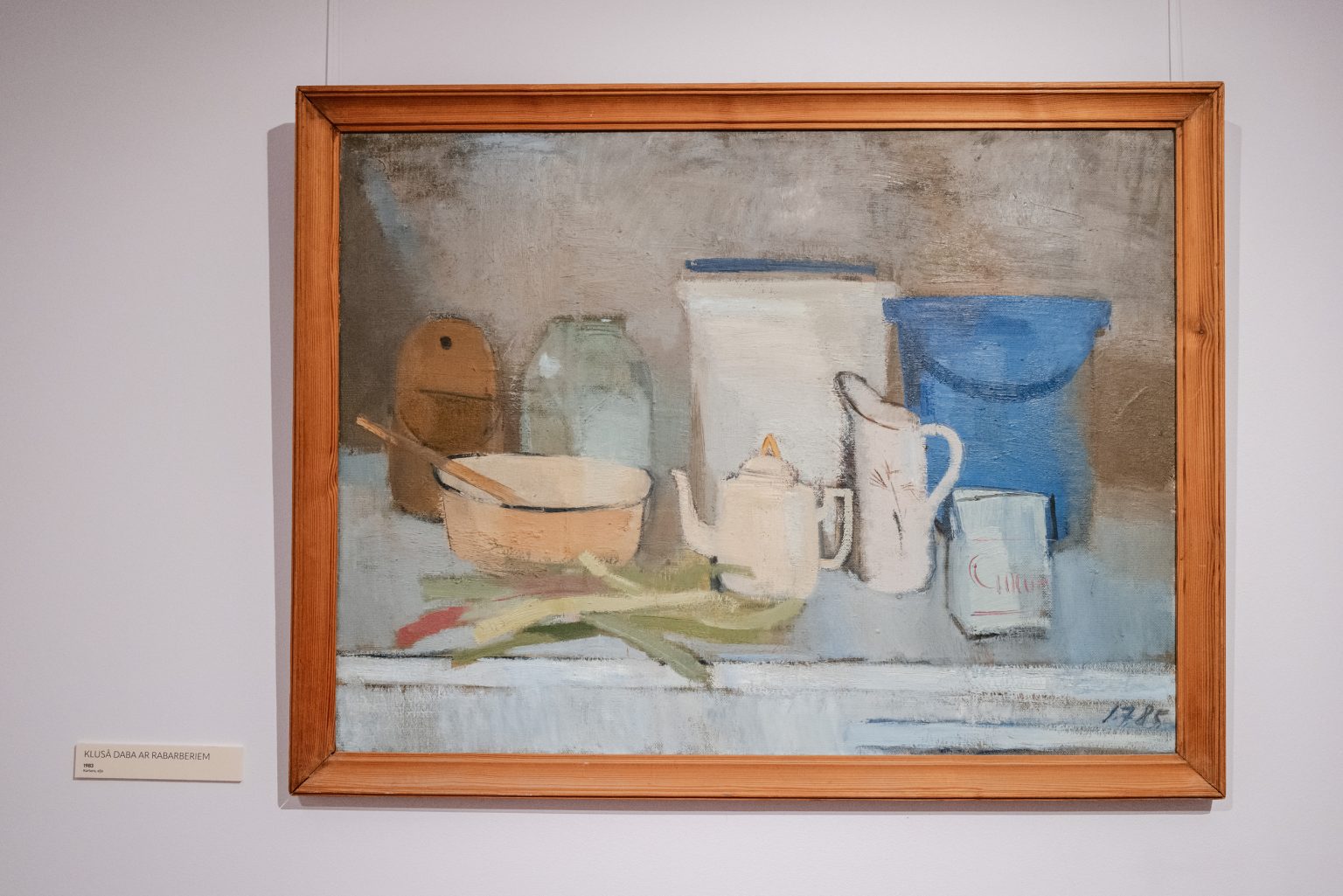
In turn, the artist’s still life compositions offer a deeply intimate insight into her personal relationship with her garden and the material environment of her home. This series of paintings traces a dialogue initiated by the artist with the world of objects, perceived through various senses, an attempt to highlight existing thematic elements worthy of conversation, and organically integrate them into a unified, colour-illuminated circle of reflection. The reason for such domestic mise-en-scènes could be freshly cut, juicy, transparent green rhubarb stalks, bundled together and resting alongside well-used kitchenware in the painting Still Life with Rhubarb (1983). It could be a pair of pumpkins, warmed by the low autumn sun and brought from the home garden, resting on a white, light-filled windowsill, accompanied by a bowl of golden-transparent apples and a bouquet of russet dahlias in the composition Still Life (2015), or a collection of closely related coloured objects united in the honeyed glow of August light in the painting Light in August (2023). Within the quiet co-existence and conversation of green world beings, two brightly resonant spring flower compositions are revealed: In the Spring Sun (2014) and May (2022). In both cases, the windowsill, bathed in the bright light of May, acts as a close, long-awaited meeting place where, arranged by the artist’s hand, long-unseen pairs of flowering plants – lilies of the valley, tulips, and blue snowdrops – have come together. Gently resonating with the dazzling, light-infused canvas, the sky-blue joy of suddenly revived spring colours and anticipated growth, these, alongside many other images created by the artist, undoubtedly transport the painted moment into an infinite future space filled with peace and human values.
“Light is the source of life. It is everywhere, it vibrates everywhere. Nature around us is wonderful. Beautiful in every season and at any time of day. It is beautiful even now – on a late, rainy November evening. Only it is almost impossible to paint. Every daily walk from Pārogre to Ogre is like a pilgrimage, because no two days are ever the same. It is important for me to show light, illumination, which evokes various emotions. When the outstanding Latvian painter Eduards Kalniņš was asked which artists influenced his works, he replied – Latvian nature.”
Silvija Ausma Jākobsone