
Painting by Juris Ģērmanis – Ziedonis Krūmiņš, the first leader of the Ogre Photo Club
One of the treasures in the collection of the Ogre History and Art Museum is a 1970s painting by Juris Ģērmanis depicting Ziedonis Krūmiņš, the first leader of the Ogre Photo Club. In the autumn of 2017, the museum acquired three works by Juris Ģērmanis and 28 photographs by Ziedonis Krūmiņš. The museum staff were […]
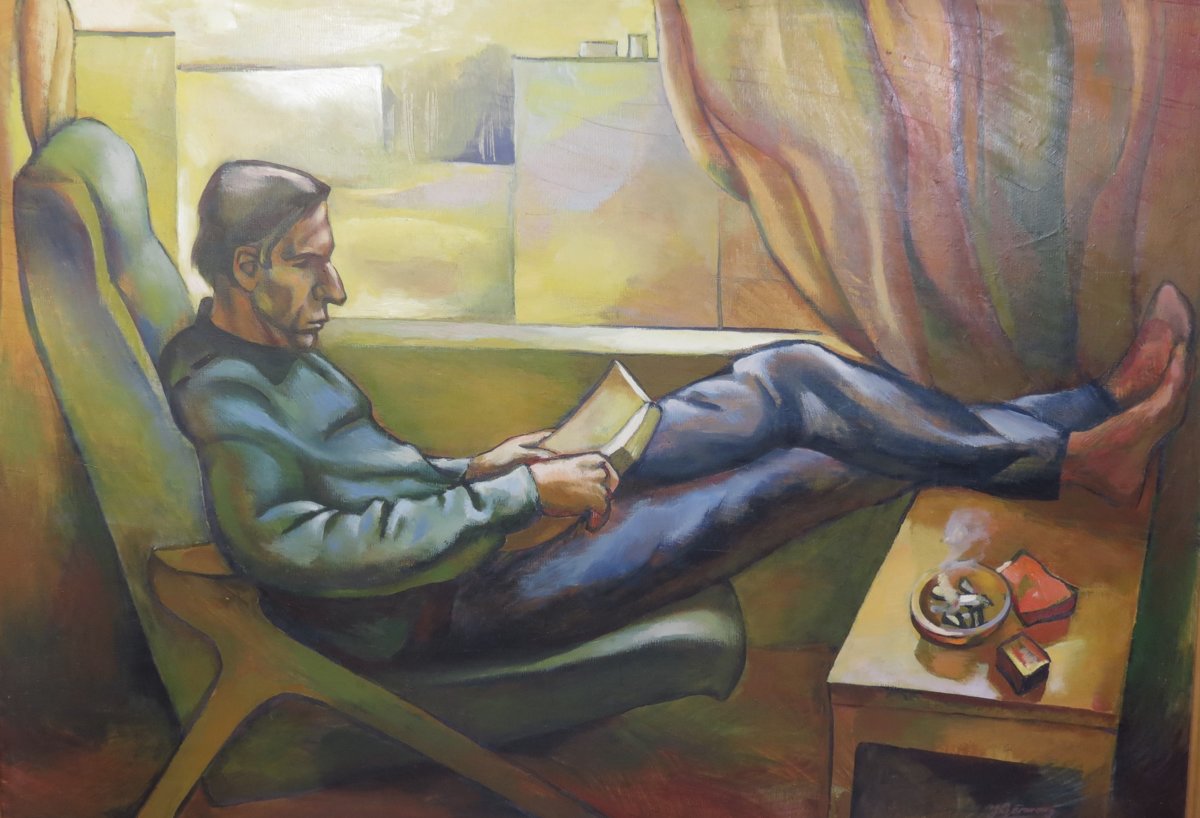
One of the treasures in the collection of the Ogre History and Art Museum is a 1970s painting by Juris Ģērmanis depicting Ziedonis Krūmiņš, the first leader of the Ogre Photo Club.
In the autumn of 2017, the museum acquired three works by Juris Ģērmanis and 28 photographs by Ziedonis Krūmiņš.
The museum staff were surprised to receive three works by Ģērmanis from the 1970s, donated by Mārtiņš Bagātais, the godson of Ziedonis Krūmiņš’s wife, Astra. The artworks had been discovered in an apartment building on Grīvas Prospekts in Ogre.
Juris Ģērmanis was active in Ogre during the establishment of the Ogre Knitwear Factory. In the 1960s, he worked there as a decorative artist, having come to Ogre in the hope of obtaining an apartment. At that time, the Jaunogre residential district was under construction. He received an apartment on Padomju prospekts (now Mālkalnes prospekts), married a woman from Ogre, and their daughter Agnija was born there and attended school in the city.
The technical supervisor of the construction of the Ogre Knitwear Factory was the socially active Ziedonis Krūmiņš (1932–2008). In 1969, following the establishment of the Ogre Photo Club, he became its first leader, holding this position until 1974.
Ziedonis Krūmiņš and Juris Ģērmanis shared an office at the factory and became close friends. During this period, Juris Ģērmanis created a painting portraying Krūmiņš in a moment of rest, seated in an armchair and reading a book. In the background, a window with curtains opens onto a view of Ogre’s buildings.
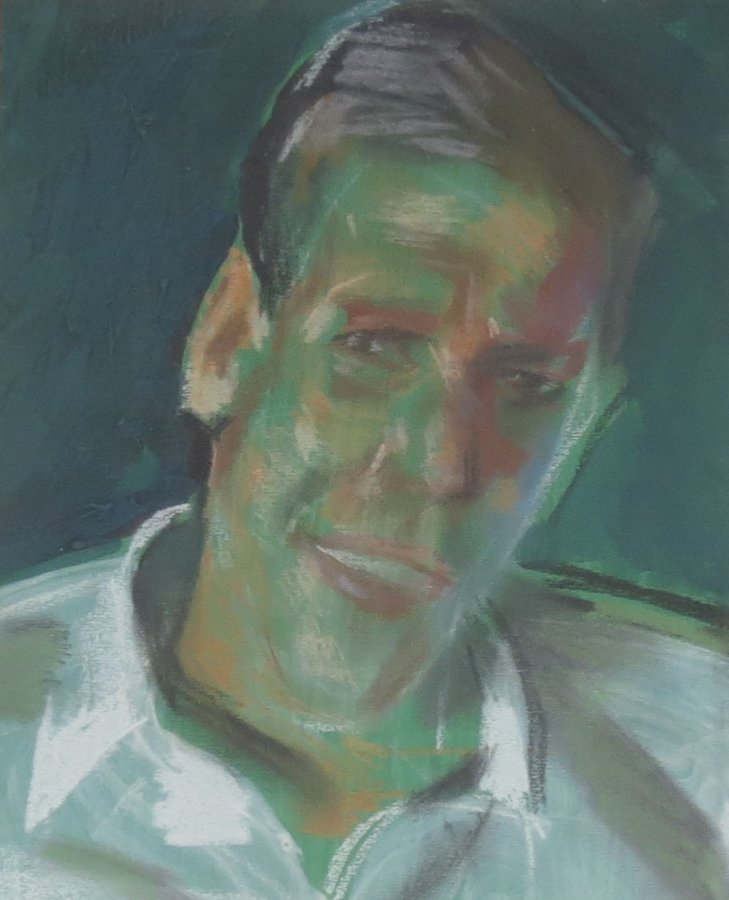
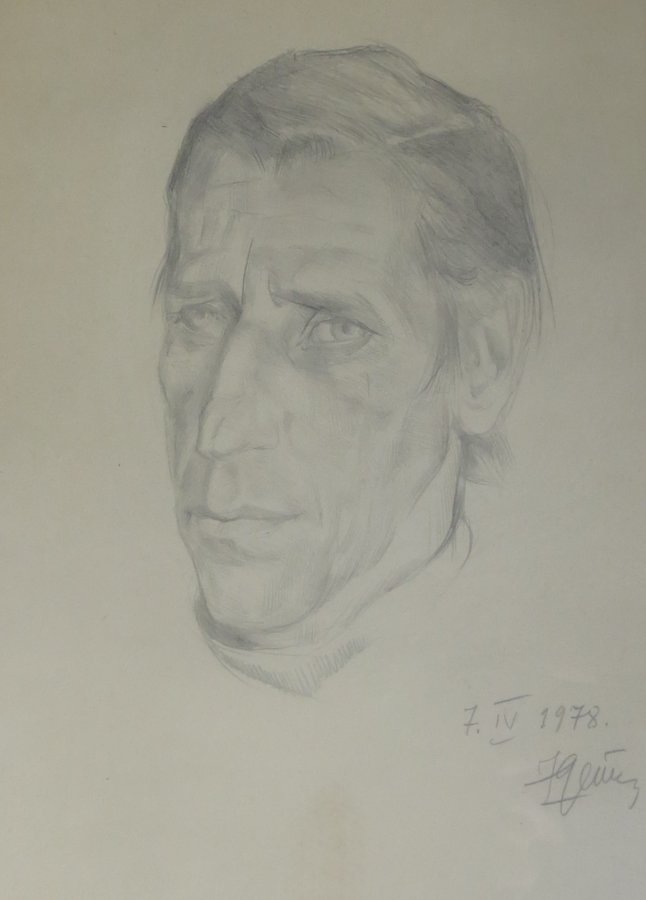
In addition, Juris Ģērmanis created two portrait sketches of his friend – one in pencil and one in pastel – as well as a portrait of Astra Krūmiņa (1928–2017), Ziedonis Krūmiņš’s wife. All of these works are now part of the museum’s collection.
Ziedonis Krūmiņš was a very erudite and versatile individual. He held two higher education degrees – he graduated from the Faculty of Civil Engineering at Riga Technical University and obtained a higher education degree in journalism through distance learning. However, curiosity guided him throughout his life; he quickly mastered everything new and kept up with the times.
He was known to be a devoted reader and a passionate smoker.
He also enjoyed alpine skiing, travelling not only to Gaiziņš but even to Mount Elbrus to indulge in his hobby. Music was another of his passions, particularly classical jazz. In 1979, when Mārtiņš Bagātais visited Ziedonis Krūmiņš, he put on a tape recording and said: “Mārtiņš, listen to this fantastic band! This is something else!” It turned out to be The Jackson 5, featuring Michael Jackson.
Ziedonis Krūmiņš obtained his tape recordings from Juris Lapinskis, a leading recording specialist in Latvia in the 1970s and 1980s, who lived in a private house in Pārdaugava, where he recorded and distributed music.
Ziedonis Krūmiņš was also a great aesthete when it came to clothing. He had a wardrobe filled with suits and around 350 ties.
After retirement, he remained active not only in the Ogre Photo Club but also as an assessor at the Ogre Court. On one occasion, a court hearing involving Roma people was taking place. The entire camp had gathered, children were making noise, and when Ziedonis Krūmiņš and a colleague, both finely dressed, entered the courtroom before the judge, one of the Roma women turned to the noisy crowd and exclaimed: “Quiet, you fools! The gentlemen of the court are coming!”
In later years, the large tie collection was donated to the Latvian National Theatre.
Ziedonis Krūmiņš had a strong zest for life and a sense of humour. Even when he was already suffering from cancer and in poor health, he was able to joke in various situations.
Ziedonis Krūmiņš took many photographs and participated in exhibitions. As evidence of this, a poster printed at the “Cīņa” printing house survives from the 2nd Amateur Photographers’ Club Exhibition in 1962, dedicated to the 45th anniversary of the Great October Socialist Revolution. The exhibition opened on November 18.
The museum also received 28 black-and-white photographs by Ziedonis Krūmiņš, depicting people participating in various sports activities and relaxing by the sea. Many people are shown in their daily lives – working, chatting, eating, or carrying out everyday tasks. The photographs were taken in the 1970s.