
The Jacket of Alpinist Aivars Bojārs
The jacket of alpinist Aivars Bojārs (1959–1993) is a particularly significant new acquisition for the museum. Its value lies both in the fact that the jacket, together with its owner, reached an altitude of over 8,000 metres on the way to the world’s highest peak, Mount Everest, and in its connection to events that were […]
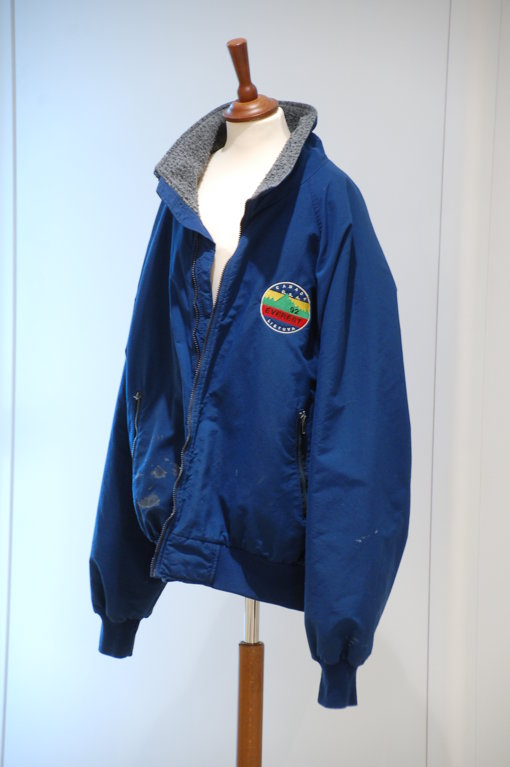
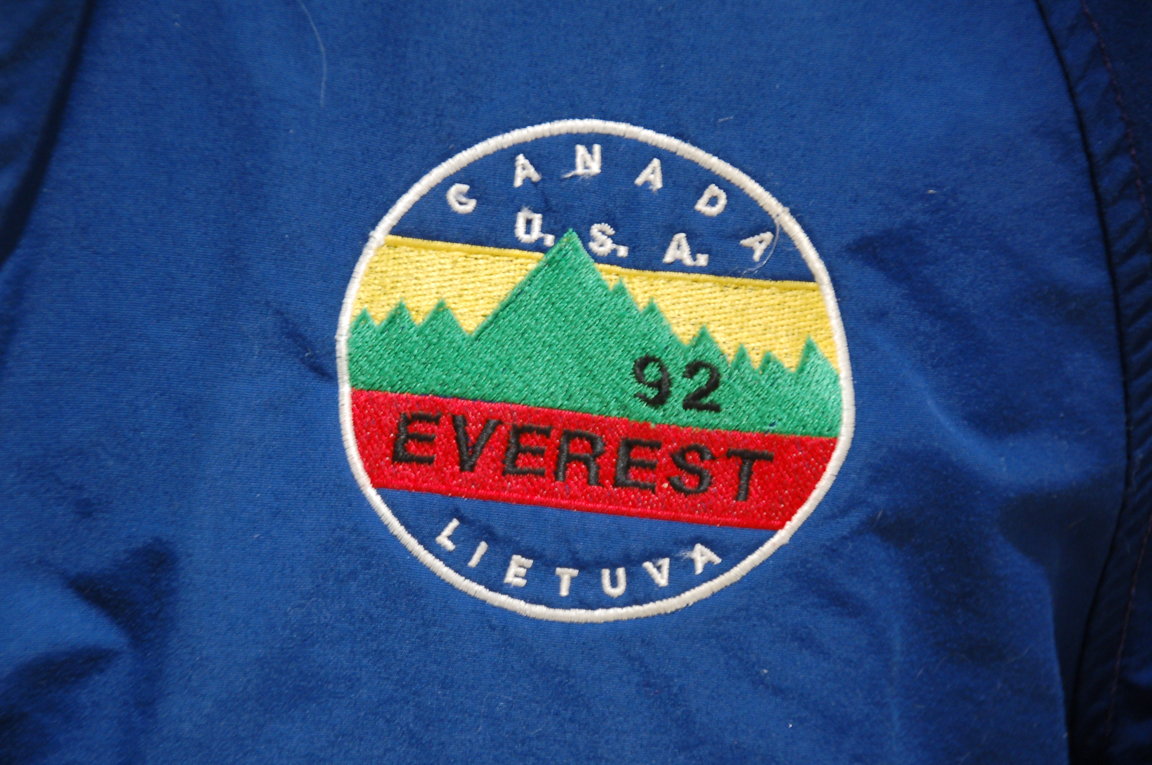
The jacket of alpinist Aivars Bojārs (1959–1993) is a particularly significant new acquisition for the museum. Its value lies both in the fact that the jacket, together with its owner, reached an altitude of over 8,000 metres on the way to the world’s highest peak, Mount Everest, and in its connection to events that were closely followed by several Latvian newspapers in the early 1990s.
The jacket entered the museum’s collection as a donation from Voldemārs Eihe, former director of Ogres Commercial Bank. It had been given to the Eihe family by their neighbour and family friend, the alpinist’s mother, Lūcija Bojāre.
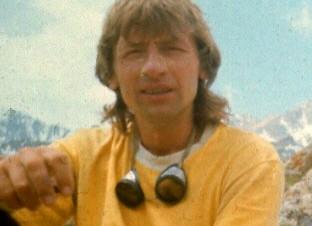
Aivars Bojārs was a well-known and experienced alpinist, President of the Latvian Youth Mountaineering Association, a medical doctor, and a coach for many young Latvian rock climbers in the 1980s. He wore this simple, warm sports jacket during his first and only attempt to climb Everest (8,848 m), when in November 1992 he set out to pursue his dream of reaching the world’s highest peak.
The jacket bears an emblem on the chest featuring a stylised Lithuanian flag and the inscription “EVEREST ’92 LIETUVA”, as the Baltic expedition was organised by the Lithuanian Alpinist Federation. The climbers had acquired the necessary physical preparation and equipment, yet in an interview prior to the ascent, Bojārs admitted that everything would depend on weather conditions. His assessment proved correct: at an altitude exceeding 8,000 metres, the 1992 Everest expedition was forced to abandon the climb due to severe weather, when a snowstorm and menacing gusts caught the climbers by surprise. Despite this setback, the passionate alpinist did not abandon his goal and planned another attempt. In an interview, Aivars Bojārs spoke about his longing for the mountains:
“The Himalayas are the ‘white islands’ for alpinists. They are the spiritual pole of the entire world. I go there without knowing what attracts me more – the high peaks or the spirituality. If I were not an alpinist, I would go there as a traveller. Alpinism is my path into this world of spirituality. In life, everything is directed towards a peak. When one is reached, we choose the next. All of life is an ascent – sometimes successful, sometimes not. Every person must find their own ‘white islands’, but the Himalayas are a universal place for everyone. Everyone should go there to gain the strength to live. I can only wish for everyone to find their own ‘white islands’.”
To prepare for a new attempt on Everest, in February 1993, Aivars Bojārs travelled to the Caucasus with several of his students, where he climbed Mount Elbrus (5,642 m) as a training ascent. Tragically, this became the final climb of the 33-year-old alpinist, and his dream of carrying the flag of the Republic of Latvia to Everest remained unfulfilled. Aivars Bojārs died after slipping on mirrored ice. A member of the climbing group later recalled: “Halfway up, Aivars slipped, and we were unable to help him on the 50-degree slope.” His death was later compared by many to that of a highly skilled pilot fatally injured while riding a bicycle.
It should be noted that in 1992, when Aivars Bojārs was preparing for his Everest ascent with the Lithuanian expedition, no alpinist from the newly independent Baltic states had yet reached the summit. Only in May 1993 did newspapers report that on May 10, Lithuanian alpinist Vladis Vitkauskas became the first climber from the Baltic states to reach Everest, carrying his country’s flag to the summit, as well as the Latvian flag, which Aivars Bojārs had been unable to do during the 1992 expedition.
Santa Šustere,
former History Specialist at the Ogre History and Art Museum