
Discovery in Brīvības Street Square
An interesting find has entered the Ogre History and Art Museum – an old building element discovered in Ogre during the reconstruction works of Brīvības Street Square. As a tractor levelled a small mound in the centre of the square, Senija Proose, landscape architect of Ogre Municipality, noticed something unusual – an object that appeared […]
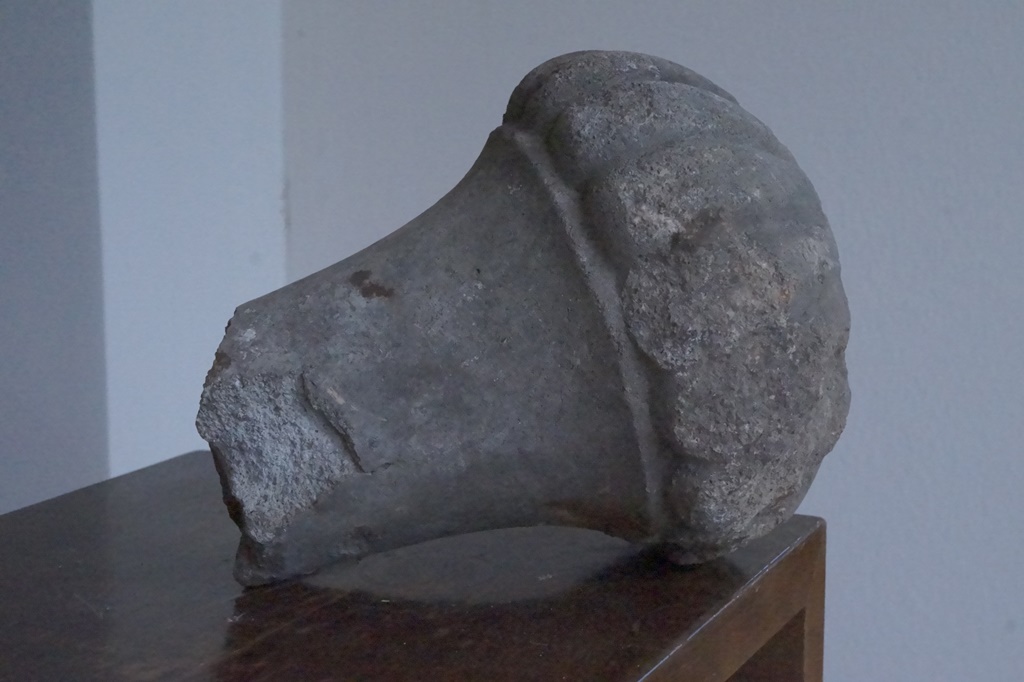
An interesting find has entered the Ogre History and Art Museum – an old building element discovered in Ogre during the reconstruction works of Brīvības Street Square. As a tractor levelled a small mound in the centre of the square, Senija Proose, landscape architect of Ogre Municipality, noticed something unusual – an object that appeared to be a fragment of a building element. Senija Proose brought the rather heavy concrete find to the museum.
The museum’s archive contains documents and photographic materials related to the development of Brīvības Square dating back to the early 20th century. This find is a tangible historical testimony to the earliest history of the city of Ogre and to a building that once stood in the square.
In 1910, entrepreneur Mārcis Paucītis built a beautiful, large house and a stable in what is now the centre of Brīvības Street Square, then located at the corner of Lindenberg Street and Bērzu Avenue. The project was designed by the well-known architect Max von Ozmidoff. Unfortunately, the building’s existence was short-lived. In 1914, World War I began, and Mārcis Paucītis, like many other residents of Latvia, fled to Russia as a refugee. For two full years, the territory of Ogre was in the front line and subjected to heavy shelling by the German army from the left bank of the Daugava River. Almost all the summer houses of the Ogre resort and farmsteads were destroyed.
When the building’s owner Mārcis Paucītis returned home from Russia, he found only a pile of ruins where his house had once stood. The stable, however, had survived. It was rebuilt into a residential building, which still stands in the square today.
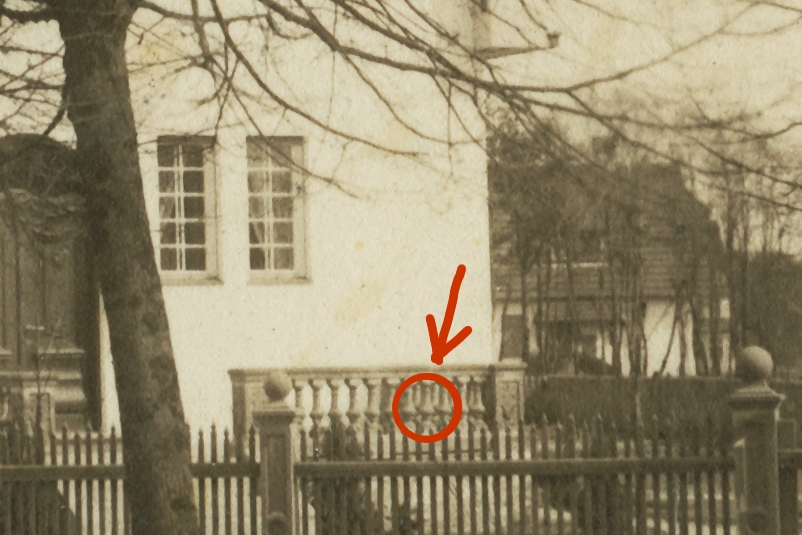
As can be seen in an old photograph of the building, the concrete element found in the square is a fragment of a decorative fence that once stood by the entrance doors on the building’s façade. It is possible that the square still holds other traces of the building that once stood there.
Evija Smiltniece,
Former Director of Ogre History and Art Museum