
Kārlis Hūns (1831–1877)
Little is known about painter Kārlis Hūns’ childhood and early years. Kārlis was the fourth of six children in the Hūns family. He could spend hours watching his father work in the carpentry workshop, often drawing his father’s creations with remarkably steady hands. After studying at Riga’s Dom School, he went to St. Petersburg in […]
Little is known about painter Kārlis Hūns’ childhood and early years. Kārlis was the fourth of six children in the Hūns family. He could spend hours watching his father work in the carpentry workshop, often drawing his father’s creations with remarkably steady hands. After studying at Riga’s Dom School, he went to St. Petersburg in 1850 to become an artist. When it turned out that his knowledge was insufficient to begin studies immediately, Kārlis Hūns started working as an assistant lithographer-illustrator at the Russian Academy of Sciences. From 1852, he attended evening drawing classes at the St. Petersburg Academy of Arts and began his studies there in 1854, when he quit his lithographer work. Considering the Hūns family’s modest financial circumstances, his study years were likely marked by struggle.
This success largely determined Hūns’ future path: seven years of advanced studies in Paris, study trips (across Europe and Russia), attaining academic and professor status, teaching at the Academy of Arts in St. Petersburg, and participating in exhibitions (the Paris Salon, World Exhibitions, Academy of Arts exhibitions, and later the Traveling Art Exhibition Society shows). In 1870, the artist received the title of professor of historical painting, and in 1871 began teaching at the St. Petersburg Academy of Arts. At that time, Hūns’ creative and pedagogical career seemed destined to be long and successful. In 1874, he married Vera, the daughter of the Russian architect of Italian descent Ivan Monighetti (1819–1878). Unfortunately, in the same year, Hūns fell ill with throat tuberculosis, and the prolonged illness led to his death at the Davos resort in Switzerland. Fulfilling his wish, his remains were buried in Madliena Cemetery, where several members of his family were already laid to rest.
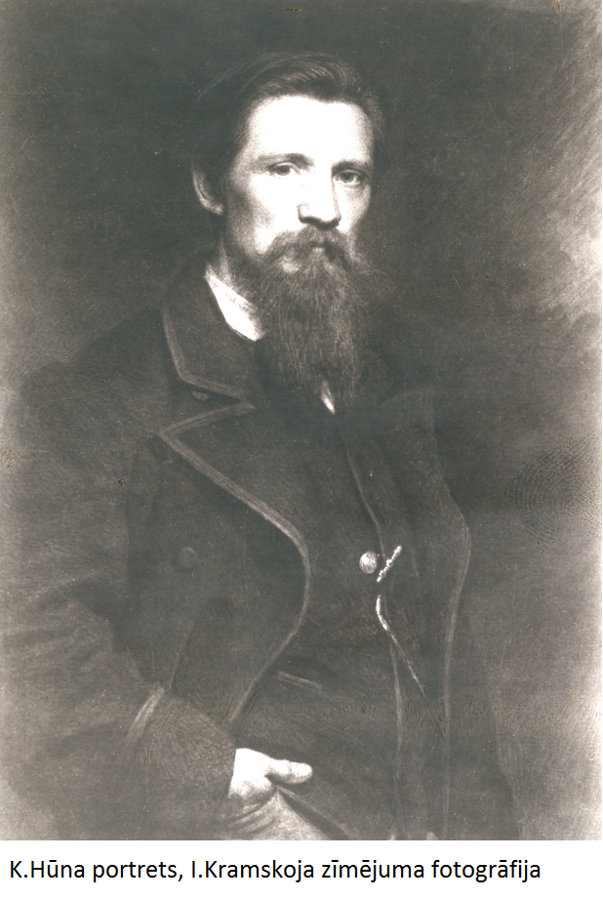
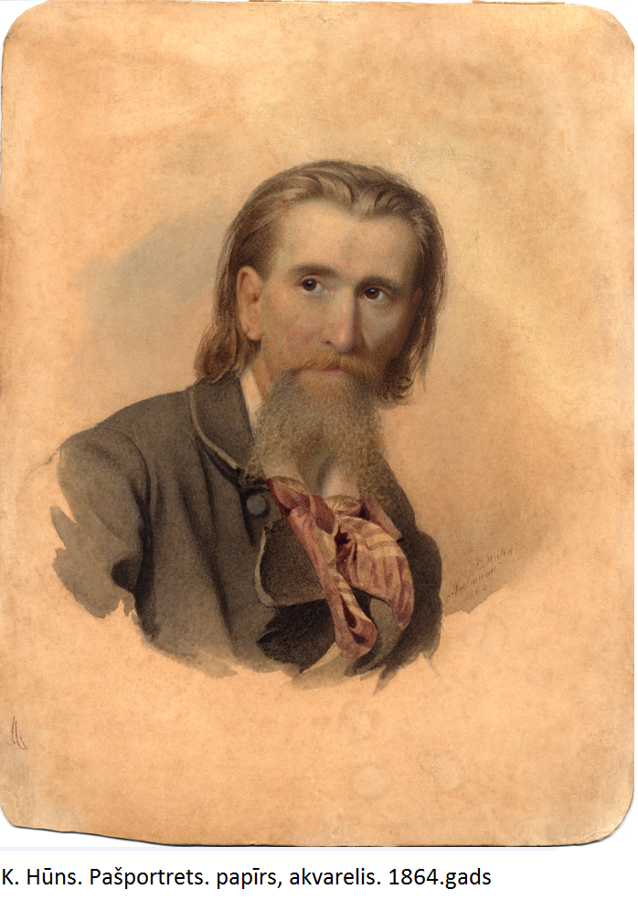
Contemporaries valued him highly as an artist, which is reflected in letters and publications, while few personal observations about Hūns have been preserved. One publication describes a meeting with him in Paris in 1864. Kārlis Hūns was of medium height, with brown, very kind eyes, red hair, and a reddish beard. He was phlegmatic by nature, rarely lost his temper, was kind-hearted and helpful, always reserved in conversation, and cautious in judging the actions of others, seeking mitigating circumstances. He was thrifty and allowed himself larger expenses only for his main passion – the acquisition of antiques. The publication also notes, in the author’s opinion, less pleasant traits: he read little, showed no interest in political processes, and was unable to assess them.
Already in 1870s Russia, reviews of the most significant art exhibitions of the time recognized Hūns’ artistic taste and the unusually masterful execution of his paintings, as well as the almost French elegance of his art and the European freedom and sophistication of his painting.
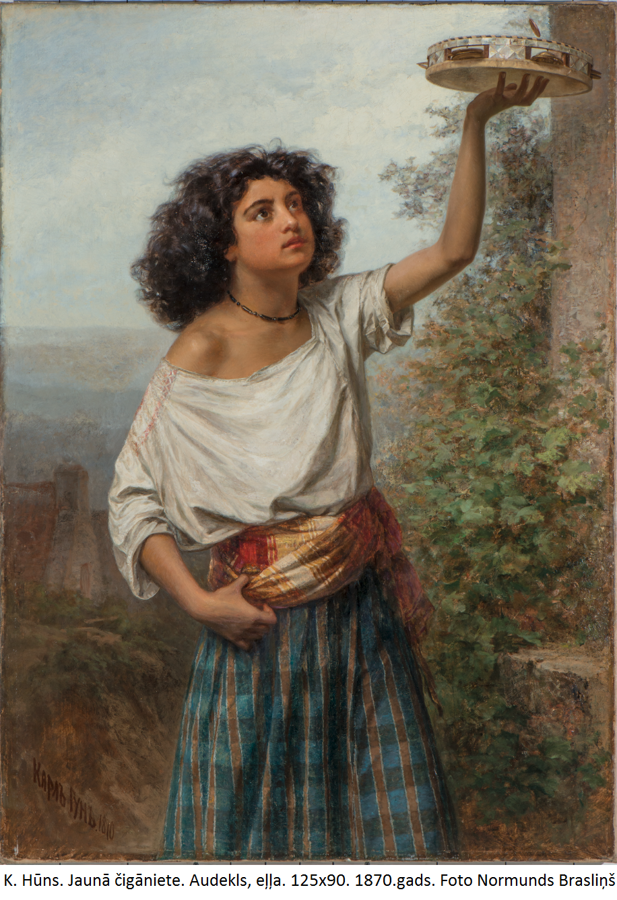
Hūns’ painting is characterized by rational and precisely constructed compositions, a harmonized and varied color palette, virtuoso imitation of real-life objects, and a balanced combination of painterly completeness with non-finito incompleteness. He also worked extensively in pencil and watercolor, where he sought sharply observed and precise impressions of nature.
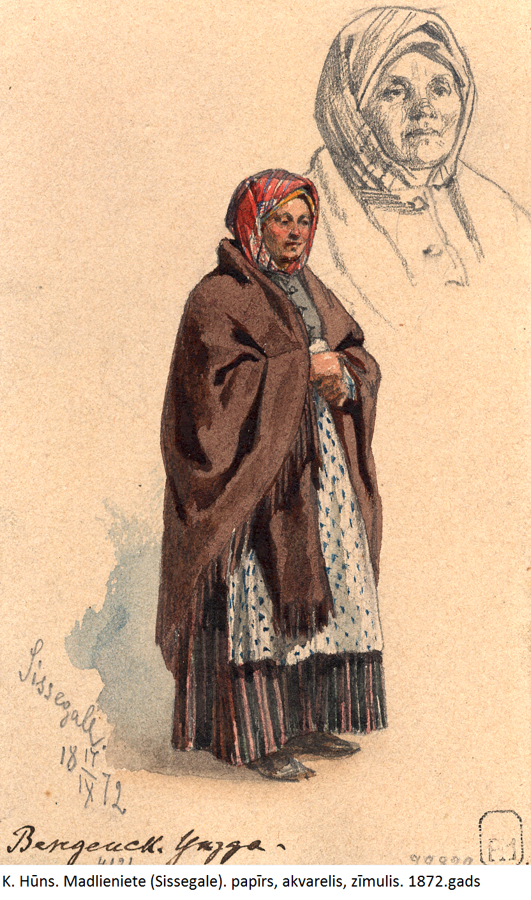
Although Hūns studied historical painting and earned the title of professor of historical painting, he was more drawn to genre painting and the theme of ordinary people’s lives, usually choosing small formats for these works. He is also known as an excellent portraitist. His consistent interest in ethnography in its broadest sense – the life of people in its many manifestations – is noteworthy. Particularly notable are his watercolors of women from Madliena and Lielvārde in national costumes (1872). Hūns’ repeated return to themes of peasant and artisan work, daily life, and family suggests personal roots: his ideas about human relationships, about simple daily work as the foundation of human existence, and his childhood memories from Madliena.
Kārlis Hūns’ work belongs simultaneously to the art of Latvia, Russia, and Europe of the second half of the 19th century, yet his place in Latvia’s cultural and art history is unique. He was the first Latvian whose studies at the St. Petersburg Academy of Arts were crowned with the Grand Gold Medal and the opportunity to study abroad. His works are preserved in many museums and private collections across the former territories of the Tsarist Russian Empire. A significant collection is held by the Latvian National Museum of Art in Riga, where Hūns’ paintings are displayed in the permanent exhibition.